NYC's First ADU Plan Library: 11 Designs and Up to $395K in Financing
Chris Koss, AIA|Published June 17, 2026
NYC launched its first pre-approved ADU plan library in March 2026, offering 11 DOB-reviewed backyard cottage designs and up to $395,000 in Plus One ADU financing. The application round closed June 12.
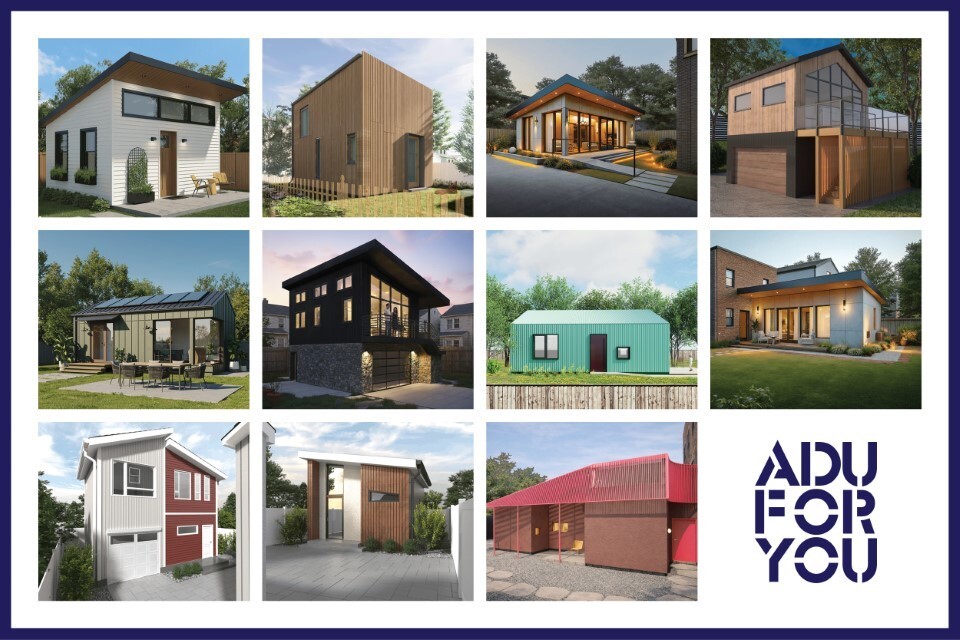
Photo: NYC Mayor's Office, March 18, 2026. NYC Mayor's Office.
New York City now has, for the first time, a library of pre-approved ADU plans that homeowners can browse before they hire an architect. On March 18, 2026, Mayor Zohran Mamdani launched the ADU for You platform with eleven backyard cottage and accessory unit designs already reviewed by the Department of Buildings for code compliance. Alongside it, the city reopened the Plus One ADU Program, which offers up to $395,000 per household in low- or no-interest city loans and state construction grants. The first application window closed June 12, 2026. A second round has not yet been scheduled.
What the plan library actually gives you
Until this launch, every NYC homeowner who wanted to add an ancillary dwelling unit under City of Yes for Housing Opportunity needed a licensed architect to design something from scratch and walk it through full DOB plan review. That process still applies to custom projects. The plan library at housing.hpd.nyc.gov/adu/library adds a second path: pick from eleven designs that DOB has already reviewed for general code and zoning compliance. The plans cover detached backyard cottages and other small secondary home types suited to one- and two-family lots in low-density zones.
The plans were developed with WXY Architecture + Urban Design, which led the city's pre-approved ADU design effort. Choosing a plan from the library does not eliminate the architect; it changes what the architect is doing. The city connects you with the registered design professional who created the plan, who then handles site-specific approval covering dimensions, setbacks, soil conditions, and anything particular to your lot. DOB Commissioner Ahmed Tigani described the core efficiency: the initial code review has already happened, which should produce faster permit approvals than a fully custom submission going through plan review for the first time.
That is different from California's LADBS Standard Plan Program, where pre-approved plans can in some cases move through an over-the-counter permit process with less professional involvement. NYC's version still requires an architect for every project, but front-loads the code-compliance work. For a first-time ADU client who has never filed in DOB NOW: Build, that front-loading represents a real reduction in schedule risk and early-stage uncertainty.
How Plus One financing works
The Plus One ADU Program pairs two funding streams. New York State Homes and Community Renewal (HCR) provides construction grants; NYC HPD provides low- or no-interest city capital loans. Together they cover up to $395,000 per qualifying project. The overall program budget is $85 million, distributed across 14 partner organizations statewide and targeting more than 550 ADUs total. The current NYC batch covers 37 projects.
Program administrator. Restored Homes HDFC runs the day-to-day. They handle application intake, coordinate design professionals, engineers, and contractors, and guide homeowners from pre-development through construction completion and initial lease-up. ADUs financed through Plus One are described by the program as potentially rent-restricted units, meaning the initial lease terms may carry affordability conditions depending on how the funding is structured for your specific project.
Who qualifies. Eligibility requires owner-occupancy of a one- or two-family home in a zone where City of Yes already permits an ADU. The program is particularly suited to ground-up new construction rather than simple interior conversions. The $395,000 cap was set with full ground-up builds in mind; a modest basement conversion would likely use significantly less of the available financing.
The June 12 close and what to do now
If you missed the March 18 through June 12 application window, the city has not announced when applications will reopen. City Hall indicated in March that it expects to close on the first batch of loans later in 2026. The HPD Plus One program page at nyc.gov/site/hpd has information on the program and signup options for future updates.
Use the gap before round two productively. First, confirm your lot is eligible. City of Yes ADU rules apply to one- and two-family homes in certain R1 through R5 zoning districts; the DOB has published the eligibility requirements at nyc.gov/site/buildings/codes/adu.page. The eligibility boundary matters more than many homeowners expect. Some Queens homeowners who participated in City Hall's City of Yes outreach discovered their lots fell outside the eligible area because of last-minute zoning carveouts. A few blocks can change your eligibility status entirely.
Second, browse the pre-approved plan library to identify which designs fit your backyard dimensions. The library is described as growing, so the current eleven designs may expand before the next application window opens. Third, reach out to Restored Homes HDFC through the HPD program page to put yourself on their notification list for round two.
If you are just starting to think about this
If you are a building homeowner in New York City who is still in the research phase, the ADU for You platform is the right first stop. It includes an ADU Guidebook, the pre-approved plan library, a site feasibility analysis tool, and a cost estimating tool, all accessible before you engage a design professional. The Plus One program, when open, is the most comprehensive construction financing the city has offered for this project type.
California homeowners have had pre-approved plan catalogs and state grant programs for years. New York is building equivalent infrastructure now, one program at a time. For NYC homeowners who want help navigating the eligibility check, the plan options, and the financing picture, A-du's services marketplace connects you with architects and permitting consultants who specialize in the City of Yes regime.