Byben's Offset ADU Turns a Mar Vista Garage Into 890 Square Feet
Chris Koss, AIA|Published April 6, 2026|Last updated June 10, 2026
Byben replaced a one-car Mar Vista garage with an 890-square-foot, two-story ADU whose upper level cantilevers around a rear power line. The build sits on the original garage foundation and walls.
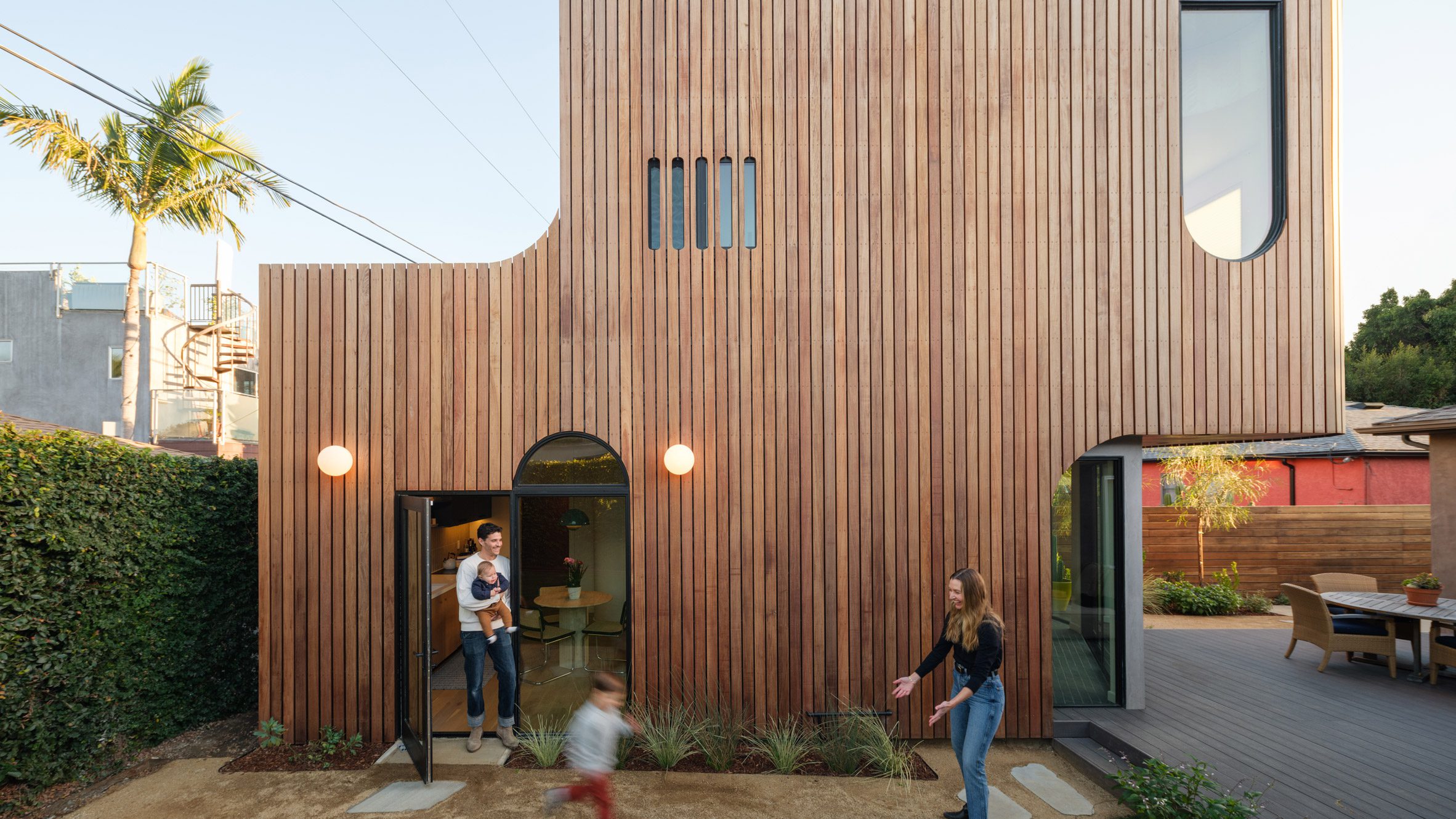
Photographs by Taiyo Watanabe for Dezeen.
Local studio Byben has finished an 890-square-foot, two-story ADU in the backyard of a Mar Vista home, built on the foundation of a one-car garage. The project, called Offset ADU, was profiled in Dezeen on April 4, 2026. It is the kind of build worth slowing down for: an LA couple with two young kids, a garage that doubled as a home office, overhead utility lines crowding the rear setback, and an architect who treated the constraints as the floor plan instead of fighting them.
What Byben actually built
The footprint. Byben kept the foundation of the old one-car garage and two of its walls, then placed a two-story, 890-square-foot dwelling on top. The ground floor holds a kitchen, dining area, lounge, a small bathroom, and a laundry room, and opens onto a deck for indoor and outdoor living. Upstairs is a single room that serves as office and bedroom, with a roof terrace on the cantilevered side. Founder Ben Warwas told Dezeen he steered the clients toward an ADU rather than a house addition because, in his words, "the size can be defined, which helps controlling the budget, whereas doing an addition on a house can get out of hand quickly."

The offset. The name is literal. Power lines run along the rear of the lot, so the upper level steps back from the property line and cantilevers over a recessed entry at the front. The carved-away corner yields a second-floor terrace, room for existing trees, and a covered bike-storage entry at the ground. Warwas told Dezeen the second level was offset "to accommodate the present zoning envelope and the power lines in the rear of the property," and that the move gained "a roof deck on the second level, more space for some existing trees and bike storage, and a covered front entrance to the ADU."
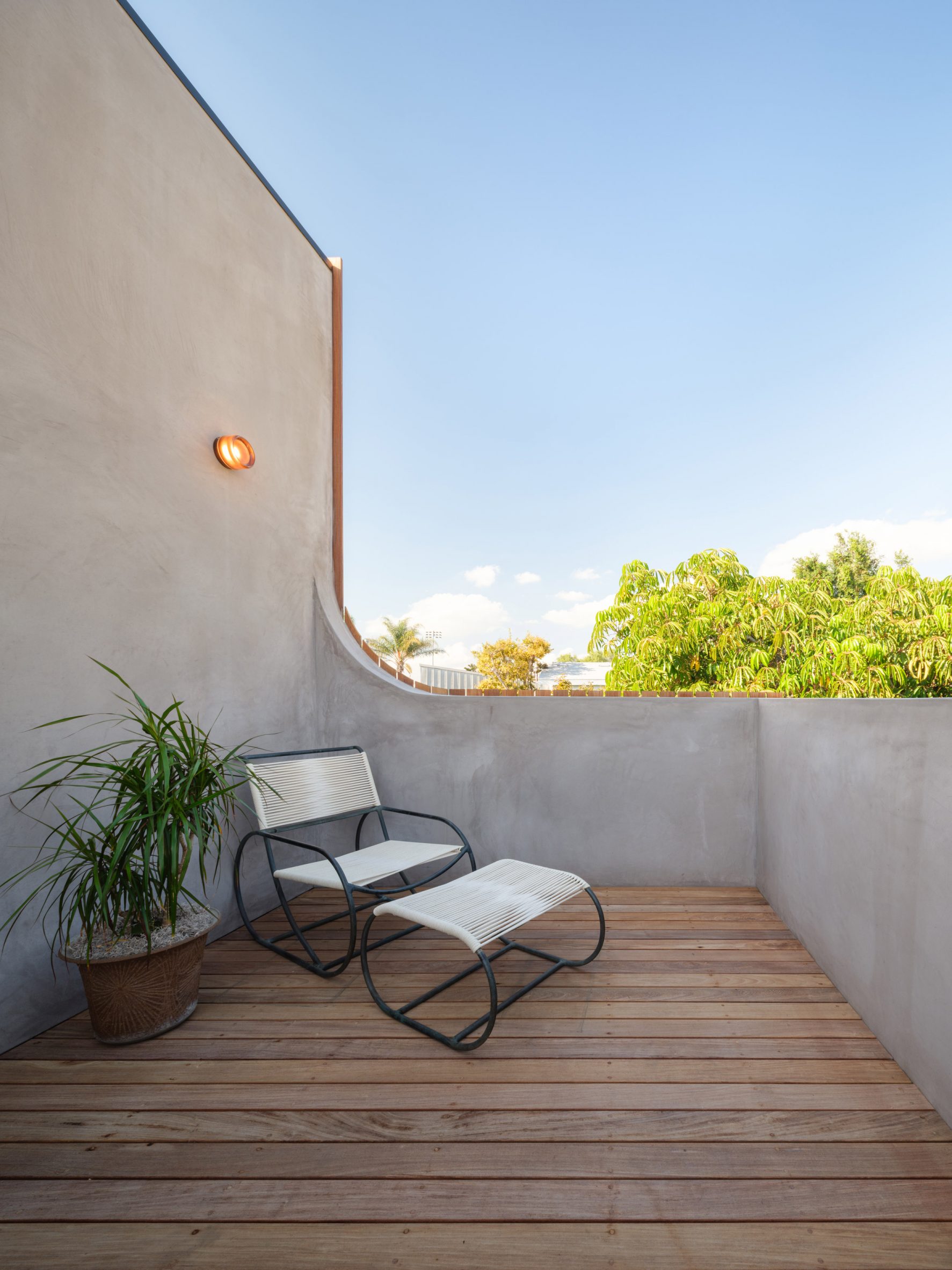
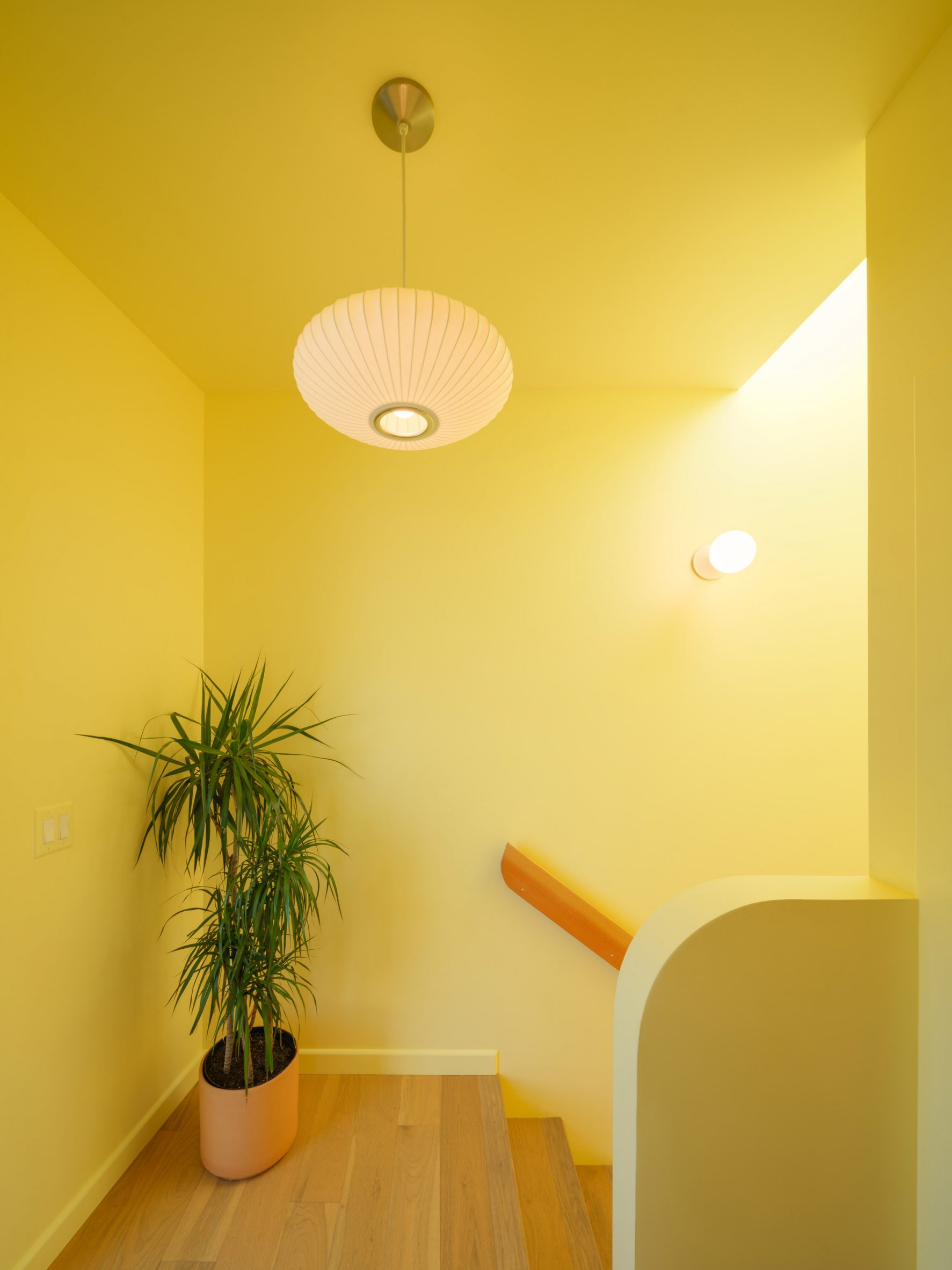
The materials. Two facades visible from the main house are wrapped in an ipe-wood rainscreen. The other two are stucco with ipe accents. Several wood edges are curved rather than mitered, which Byben describes as a way to soften the look. Inside, a skylit stairwell is painted bright yellow and lined with white oak slats. A tall U-shaped window in the upstairs office extends into a cove with a mirror at the top, producing what Byben calls "an infinite-height feeling."
Why this matters for LA ADU owners
Mar Vista is LADBS territory. Mar Vista sits inside the City of Los Angeles, west of the 405 in Council District 11. That puts this project under the City's ADU ordinance and the Los Angeles Department of Building and Safety for plan check and permits, not the County. For an owner on a similar single-family lot in Mar Vista, Palms, Cheviot Hills, or Venice, the same rules apply: ministerial approval for code-compliant ADUs, no public hearing, and as of 2026, a 15-business-day completeness review on the application package.
The constraints in this project are everyone's constraints. Overhead service drops, rear-yard setbacks, mature trees, and a garage you would rather convert than demolish are not exotic problems in LA. They are the default condition west of La Brea. Byben's response is instructive because it is not a clean-sheet design. The team kept the existing garage slab and two walls, which preserved the previous footprint under existing setbacks, reduced demolition, and likely saved meaningful structural and excavation cost.
State rules reward this pattern. California's ADU statute and the updated HCD ADU Handbook push local jurisdictions to permit exactly this kind of garage-conversion-plus-vertical-add. ADUs at or below 750 square feet are exempt from local impact fees statewide. The Offset ADU is 890 square feet, so it falls outside that waiver, but the rest of the ministerial-approval framework applies and the unit is small enough that base permit fees stay modest compared with a free-standing new build.
What this looks like in practice
Say you are an owner on a typical Mar Vista R1 lot with a 1960s detached garage in the back and a utility easement that traces the rear setback. Your zoning envelope tells you a free-standing two-story ADU can land in the back third of the lot, but the easement squeezes the upper floor.
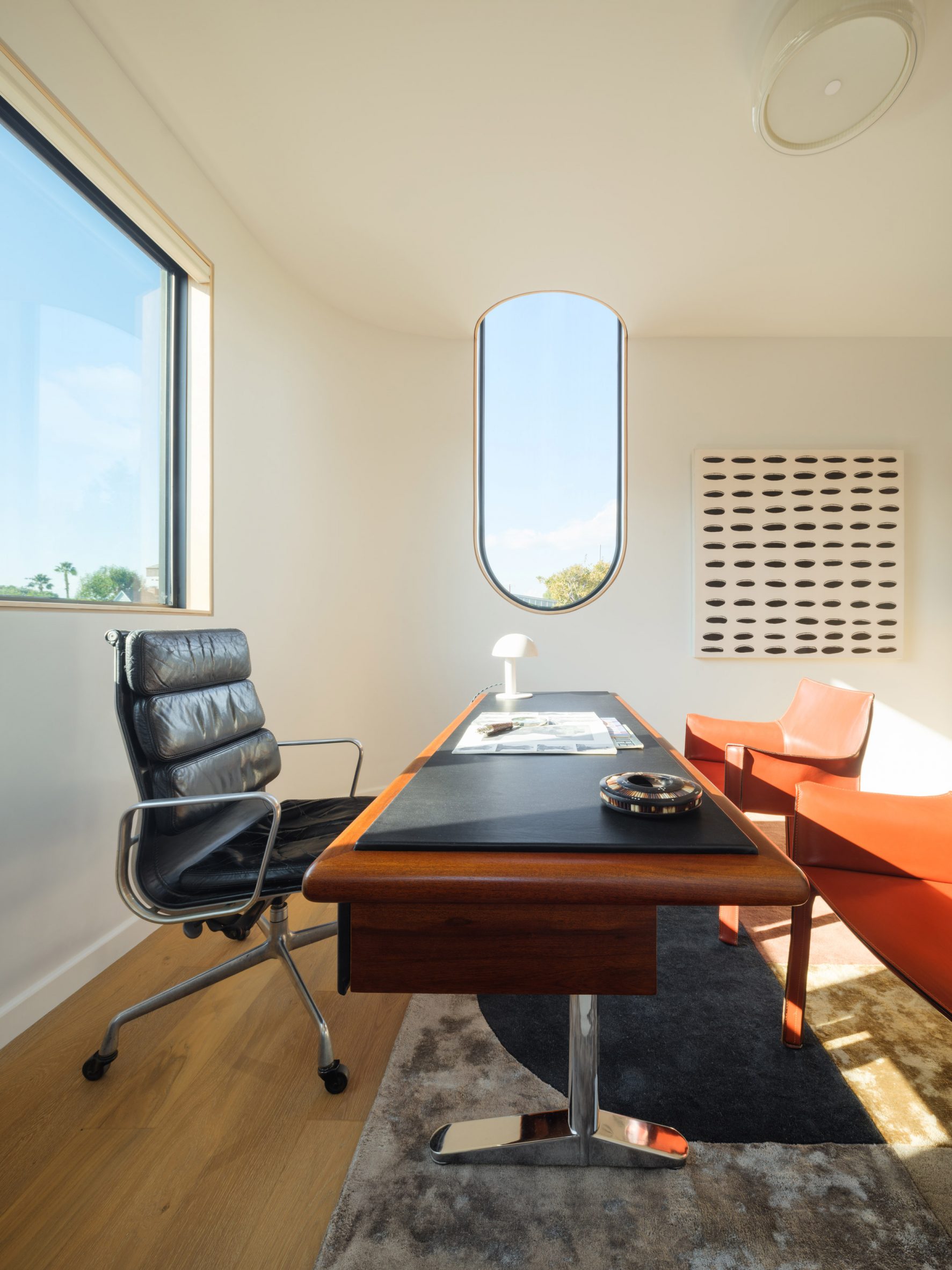
Byben's playbook applies cleanly. Keep the garage slab and as much of the wall framing as Title 24 will allow. Pull the second story back from the easement edge. Turn the loss into a roof deck. Cantilever the front to recover the floor area you gave up at the back. Wrap the visible facades in something durable enough to justify the cost, and spend the savings on a real stair and a real window. Byben pushed the budget into the yellow stairwell and the U-shaped office window, which is what makes a small two-story unit feel inhabitable rather than just stacked.
This pattern also reads well to plan checkers. A staff reviewer who sees a project that explicitly accounts for the utility easement, retains the existing footprint, and stays within the zoning envelope will spend less time bouncing comments back to the applicant. That is real money on a 15-business-day completeness clock.
What to watch next
Detached two-story ADUs are a 2026 story, not a 2024 one. Until recently, LADBS pre-approved standard plan options skewed single-story for backyard units, and the second-story setback math discouraged taller massing on tight lots. The combination of the new completeness-review timeline and California's continued attack on local "no-second-story" rules has moved this design pattern from outlier to template. Expect to see more Mar Vista, Atwater Village, and Highland Park projects with this profile on the upper floor and a stucco box on the bottom.
The detail to copy. The stair. The white-oak-slatted, yellow-painted, top-lit shaft is what gives the upper-floor room a reason to exist. If you are budgeting a similar project, do not value-engineer it away.
If you are starting an ADU project in Mar Vista or anywhere in LA County, A-du connects you with verified architects and permitting vendors who already work with this kind of detached two-story envelope.