Warren Techentin's Ivan Hill ADU Floats Over a Silver Lake Slope
Chris Koss, AIA|Published May 22, 2026|Last updated June 10, 2026
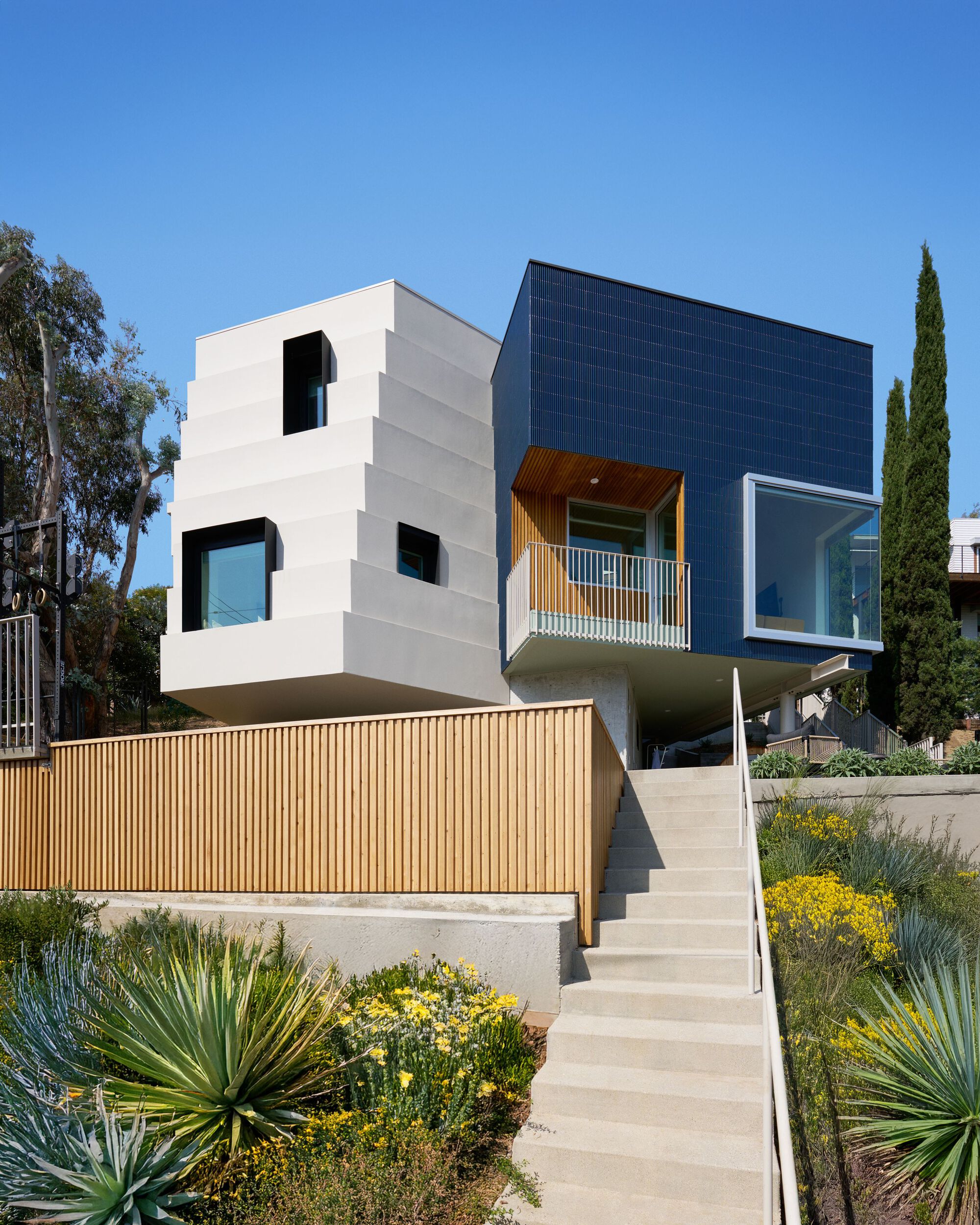
Warren Techentin Architecture's Ivan Hill ADU in Silver Lake stacks two cantilevered pods over a hillside terrace, a reflective blue tile cube and a stepped greige volume, completed 2024 and recently featured on ArchDaily.
Project photography via ArchDaily.
Silver Lake just got one of the most architecturally serious ADUs to land on A-du Insights' radar this season. Warren Techentin Architecture's Ivan Hill ADU Residence, completed in 2024 and recently featured on ArchDaily, stacks two cantilevered pods over a hillside terrace at the streetside edge of Ivan Hill: a large reflective ocean blue cube clad in ribbed tiles, plus a stepped greige volume framed in black rectilinear windows. It is the kind of small-footprint design that proves what an LA hillside ADU can be when the architect treats the site geometry as the brief.
The project
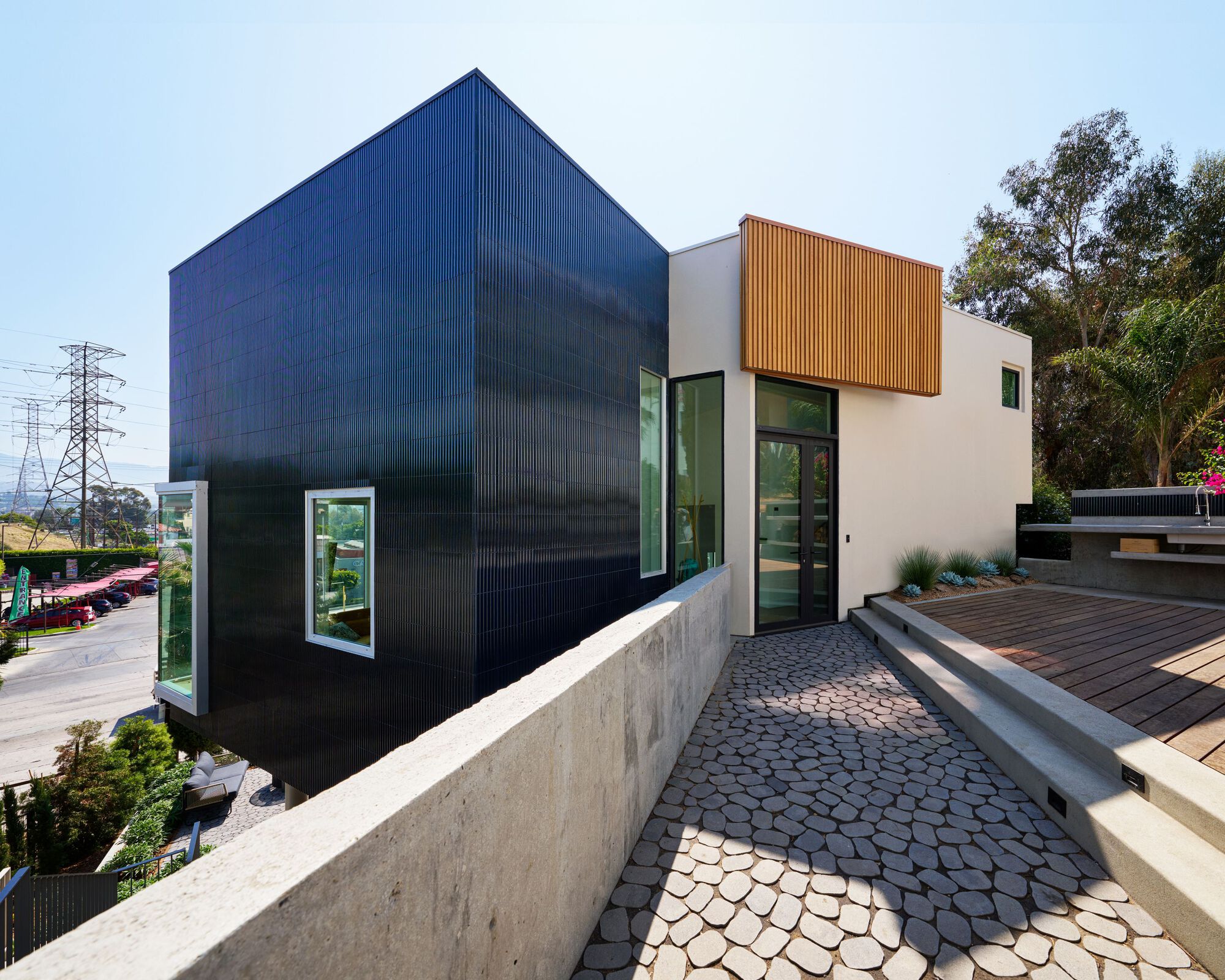
Two pods, one site. Per ArchDaily's project page, the ADU comprises two volumes that read as separate masses but operate as one residence. The reflective blue cube acts as the visual anchor, its ribbed tile cladding catching morning light off the hill. The stepped greige companion volume sits beside it with the deeper rectangular punched windows that have become a Warren Techentin signature. The work was completed in 2024 and ArchDaily picked it up in January 2026.
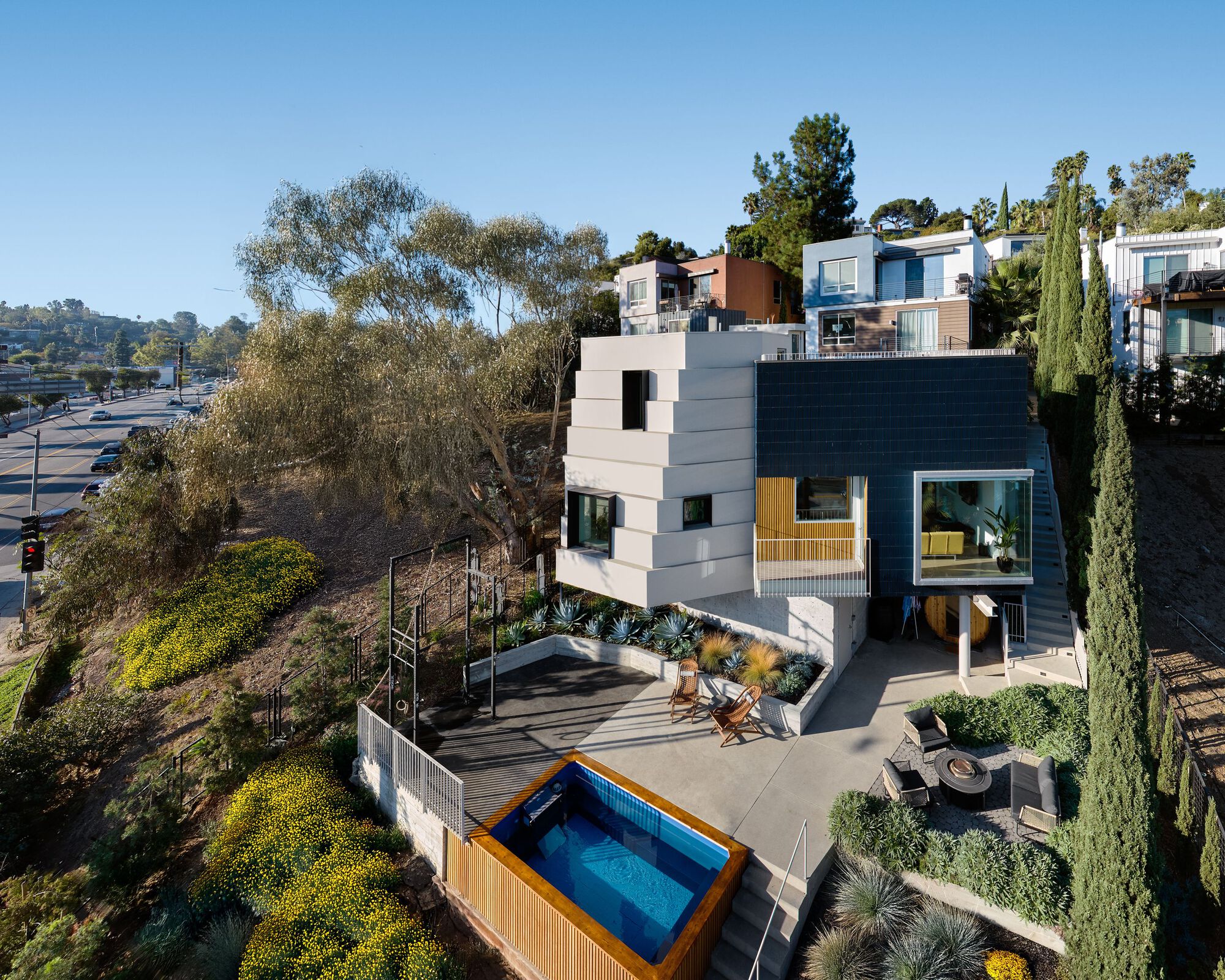
The hillside as collaborator. Silver Lake terraces are notoriously hard to build on. Slopes hit 30 percent or steeper on plenty of parcels. Setback rules add geometric constraints. The Ivan Hill solution leans into the constraints by lifting both pods off the slope rather than fighting them: cantilever where you can, foundation where you must.
Why it matters for LA ADUs
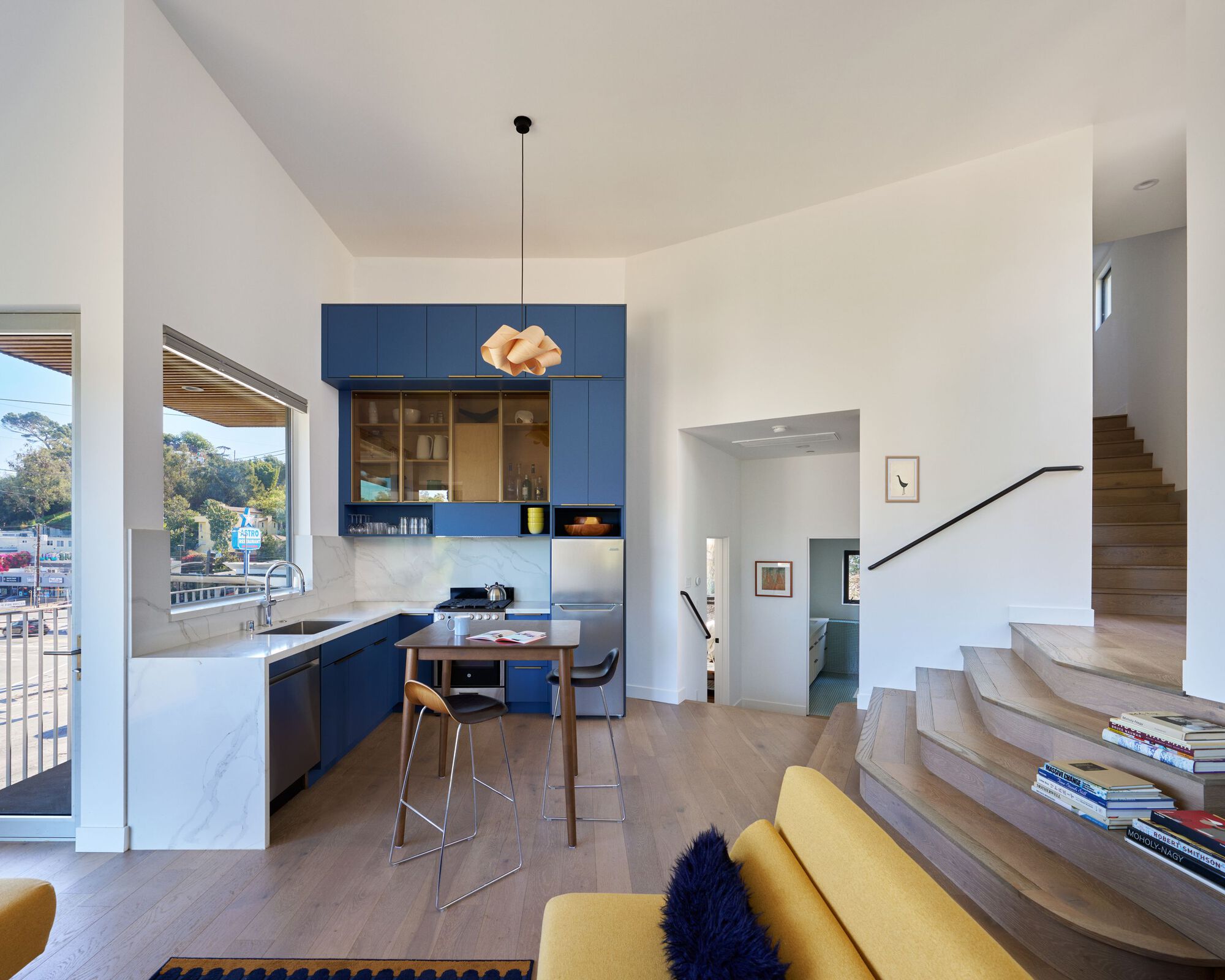
The hillside ADU question. Most LA homeowners considering an ADU on a hillside parcel run into the same chain of issues: where can the unit physically sit, what the soil report says, how to handle the Hillside Construction Regulations, and where the City pulls the line on maximum footprint. Architectural projects like Ivan Hill are useful as proofs of concept. They show that a tight footprint can produce a generous interior when the design starts from the topography instead of fighting it. For owners who have been told a hillside ADU is "too expensive to permit", a precedent like this can reset the conversation with the architect and the structural engineer.
The design vocabulary. The hillside ADU market in LA still trends generic, plain stucco boxes that ignore the slope. Ivan Hill is an early example of what happens when an LA firm treats the ADU as a real architectural commission rather than as a tax-deductible junior to the main house. Expect more clients to ask their architects for ADU work that gets photographed in design press, not just "permitted in 60 days".
What this looks like in practice
If you are considering a hillside ADU and a project like Ivan Hill is your reference image, here is the working sequence A-du Insights typically sees:
1. Soils report first. Before sketches, get a geotechnical report. The shape of the slope and the soil bearing capacity will determine whether you cantilever, terrace, or settle for a flatter footprint. Skip this step and your structural engineer will pull the design apart at the foundation review.
2. Setback geometry before form. LADBS Hillside Construction Regulations interact with ADU setbacks in ways that are not obvious from the City's published ADU bulletin alone. A real site analysis from a Hillside-experienced architect should precede any massing studies. Two pods of irregular geometry, like Ivan Hill, work because the architect mapped them onto the buildable envelope first.
3. Materials with a hillside thesis. Ribbed tile, reflective panel, dark frames; the Ivan Hill palette holds up because the materials respond to the slope's microclimate (morning light angles, marine layer condensation). Picking finishes that look generic on a flat lot can read poorly on a hillside.
4. Budget reality check. Hillside ADUs cost more per square foot than flat-lot ADUs. Expect 30 percent to 60 percent more for foundation work alone. A design-forward outcome like Ivan Hill requires architect involvement well beyond standard plan-check support; budget for the architect's services, not just construction.
What to watch next
More LA firms picking up ADU work. Warren Techentin Architecture is among a small but growing cohort of established LA firms taking ADU work seriously. The wins are visible in design press now; the operational follow-on is that more owners are arriving at A-du with named architects already in the chat. Expect the marketplace conversation about ADU design quality to shift from "do you have a pre-approved plan" to "have you seen what an architect can do on this lot."
Hillside-specific guidance. LADBS has been incrementally updating its hillside guidance. Anyone building an ADU on a hillside parcel should track the City's information bulletins for changes that could affect setback math or foundation requirements.
If you are starting a hillside ADU project in LA, A-du's marketplace connects you to verified architects and structural engineers who have permitted hillside work before.