How 16 Los Angeles Architects Solved the 1,200-Square-Foot ADU Limit
Chris Koss, AIA|Published June 3, 2026|Last updated June 10, 2026
Sixteen completed LA ADUs from Assembledge+, ORA, and others, ranging from 245 to 1,178 square feet. Dwell's roundup shows what good design looks like inside California's 1,200-square-foot cap for detached units.
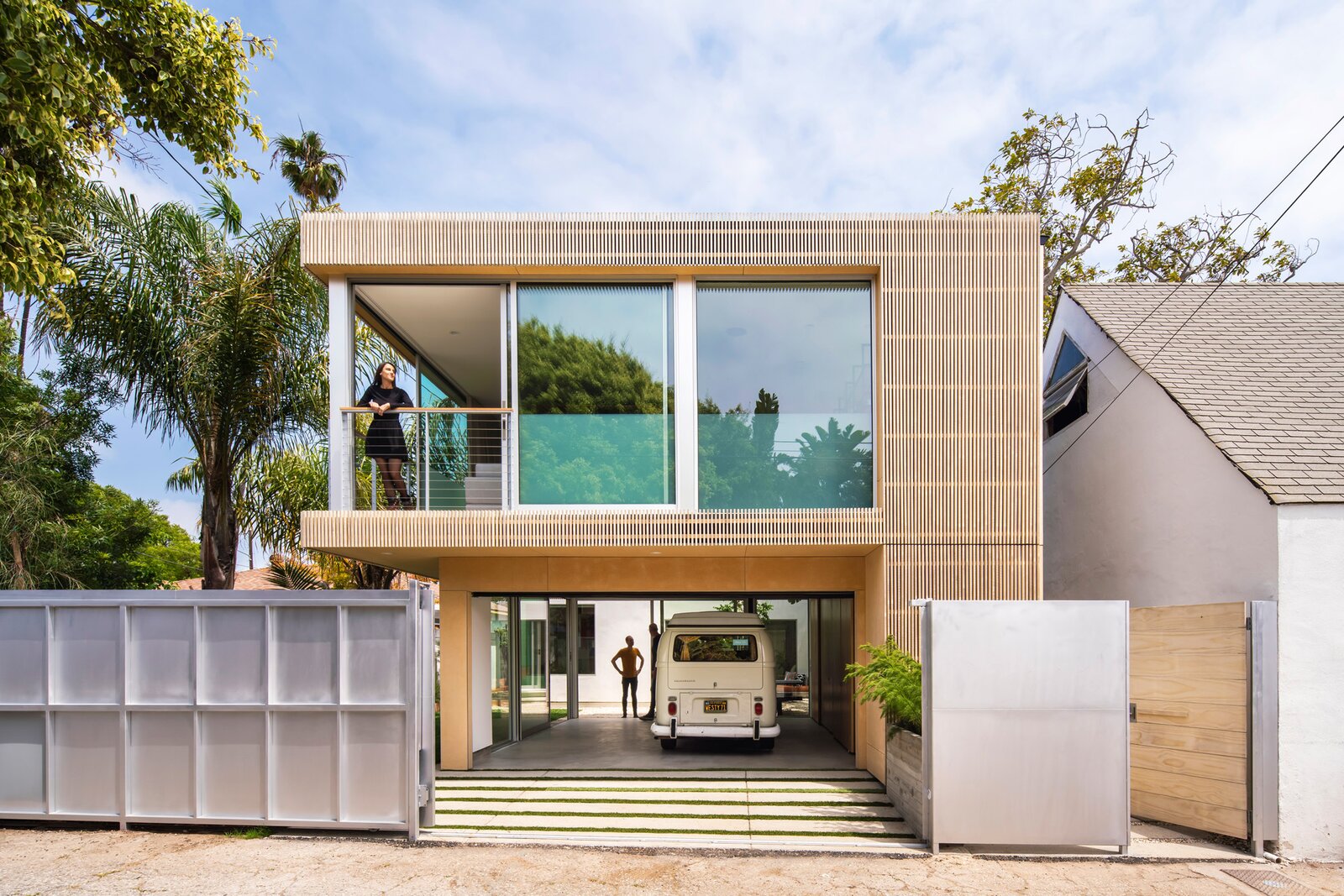
Photos by various photographers; roundup via Dwell.
California capped detached ADUs at 1,200 square feet. Los Angeles added its own pre-approved plan program in 2020 under Chief Design Officer Christopher Hawthorne. And then architects got to work. Dwell's roundup of 16 Los Angeles ADU projects, compiled by Daisy Zuckerman, documents what came out the other side: real builds with real permits, spanning a 245-square-foot hillside guesthouse in Los Feliz to a 1,178-square-foot two-story in Echo Park. What these projects share, four years after the 2022 publication, is still a useful set of case studies for anyone permitting an ADU in California today.
The constraint that shaped everything
California's Government Code Section 65852.2 sets the 1,200-square-foot cap on detached ADUs. Los Angeles adds the option to build up to 50 percent of the primary residence's square footage if the ADU is attached, but the detached limit dominates this roundup. The practical starting point for most projects was an existing garage, typically 20 by 30 feet, which gives 600 square feet at grade. Adding a second story doubles that, which is how several of the Echo Park and Hancock Park projects approached the size problem.
Paul and Yuki Gasiorkiewicz spent six months designing their Echo Park unit themselves, working to the garage's existing 20-by-30-foot footprint and then adding a second story to reach 1,178 square feet, two square feet under the state cap. Their $400,000 budget covered a project that was nearly as large as California allows. "We had always planned on designing a compact house," they told Dwell. "Having a hard limit to its size was definitely a challenge." The result is a two-story with a home office and rooms that flow rather than segment. Compact design done well tends to look like this: not rooms squeezed together, but a plan that earns each square foot.
Named firms and what they built
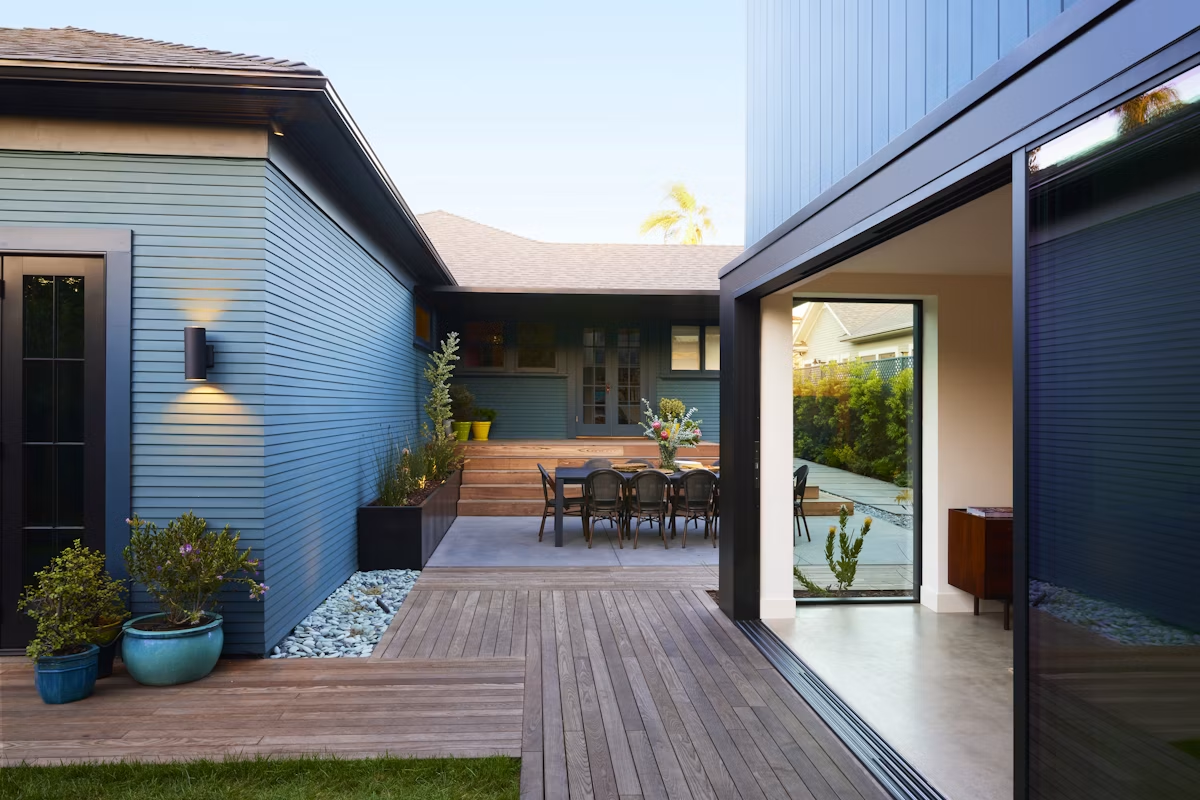
Assembledge+ (David Thompson), Hancock Park. The Vernetti family's 1917 bungalow needed more space. Adding a floor was the first idea; the ADU path was cleaner. Thompson, a founding principal of Assembledge+, had been thinking about this typology before the project: he contributed a concept called "Rear Projections" to an LA Magazine study on housing, imagining subsidized ADUs built along alleyways, dovetailing with alley revitalization initiatives. That concept informed the Vernetti ADU, which replaced the detached garage and extended the back of the house with a new main bedroom connected by French doors to a new deck. The ADU is deliberately modern, a visual contrast to the bungalow. The Vernetti daughter uses the top floor as her own space.
Lewis|Schoeplein Architects (Toni Lewis and Marc Schoeplein), Southern California. A creative couple wanted an ADU that could do more than one thing over time: art gallery, living space for adult children, caregiver quarters, or a rental. The firm kept the existing rear garage footprint to maximize lot coverage while containing construction costs. The living room doubles as gallery space; a pocket door separates the public zone from the private residential wing. Separate entrances let different users come and go without coordinating. "The list of program functions morphed as we thought about them evolving over time," Lewis told Dwell. "Flexibility is the key to longevity." That pocket door, inexpensive at time of construction, is costly to retrofit once the unit is occupied.
ORA, Mar Vista. Instead of expanding the main house, ORA designed two separate buildings: a long linear primary residence and a detached ADU with a faceted roof the firm describes as referencing the gable forms of the neighborhood's one-story cottages. The ADU is bright red, a color inspired by a strawberry bush at the owners' former home. It currently functions as an art studio, but the design anticipates conversion to an independent apartment for aging-in-place or as a rental. Separating the two buildings entirely, rather than attaching the ADU to the main house, keeps the unit's systems independent and simplifies any future use change.
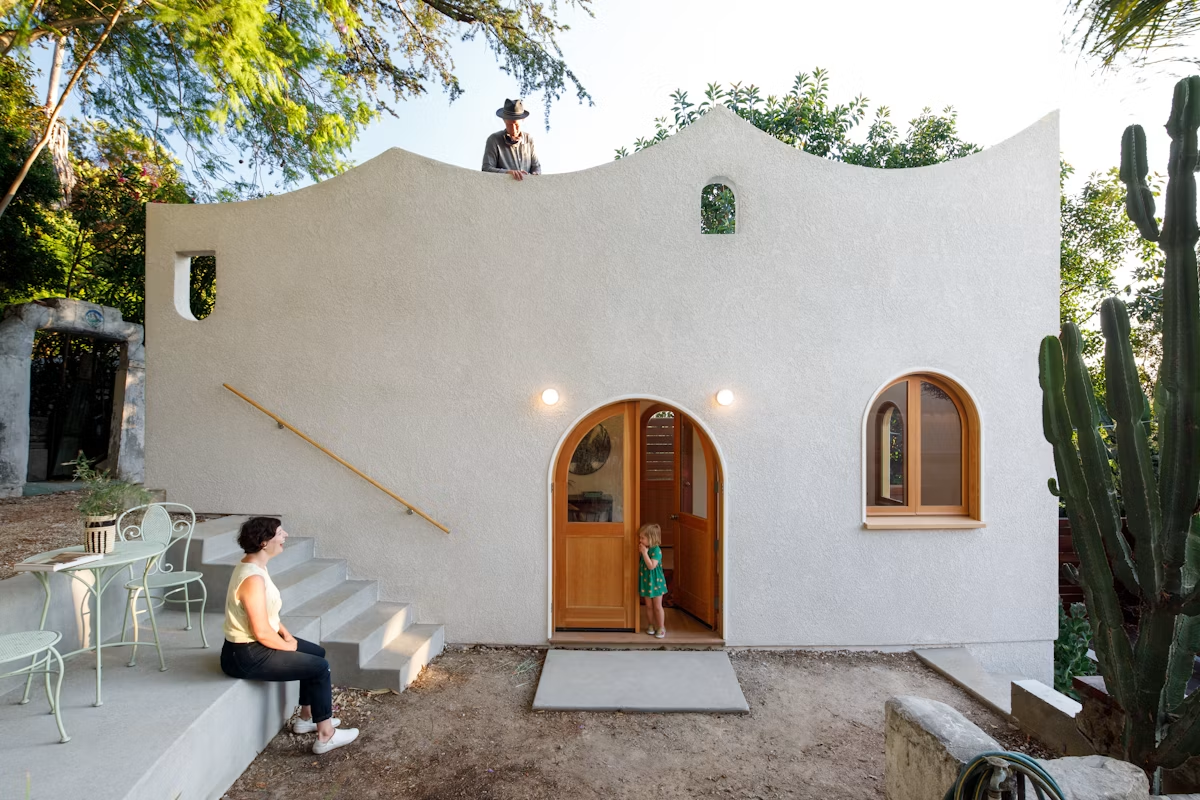
Jerome Byron, Los Feliz. At 245 square feet, this is the smallest project in the roundup. A hillside guesthouse sitting just behind the main residence, designed as a work-and-play sanctuary for a family with two children. The treehouse reference is structural as well as aesthetic: the primary access is a yellow ladder Byron designed to reference both a fire station ladder and the verticality of the hillside site. Under California ADU law, a standalone accessory structure at this size is a detached ADU, not a JADU (which must be located wholly within the primary structure).
What has changed since 2022 and what hasn't
If you're a first-time ADU client in Los Angeles today, the permit process is faster than when these projects were built. AB 1332, which took effect January 1, 2025, requires every local agency in California to maintain a pre-approved ADU plan program and to approve or deny applications using those plans within 30 days of submission. In Los Angeles, the Bureau of Engineering's YOU-ADU plan is now free to all applicants and covers several standard configurations.
What hasn't changed is the fundamental design problem: making a compact unit that serves multiple uses over time. Every project in the Dwell roundup solved this differently. Assembledge+ used the visual contrast between a historic bungalow and a modern ADU to make the addition feel intentional rather than tacked on. Lewis|Schoeplein built in a single pocket door as the unit's most important feature. ORA chose to fully separate the two buildings rather than attach and simplify the program.
The projects most useful for building/designing homeowners evaluating a first ADU are the ones with explicit program flexibility: the Lewis|Schoeplein gallery-apartment and the ORA Mar Vista unit, both designed to change function without structural modification. A unit built as an art studio today that cannot become a rental without a kitchen rough-in adds retrofit cost later. The right time to rough in the second bathroom is during construction, not after the first tenant moves in.
To compare pre-approved plan options across California cities or to find architects who have permitted projects in your jurisdiction, A-du's build marketplace is a direct starting point.