Polyhaus's 540 SF Mass-Timber ADU in San Diego: $300K in 12 Weeks
Chris Koss, AIA|Published June 12, 2026
University of San Diego professor Daniel López-Pérez built a 540 SF cross-laminated timber ADU in his San Diego backyard in 2024 for $300,000, using a patented system of 64 repeating CLT panels.
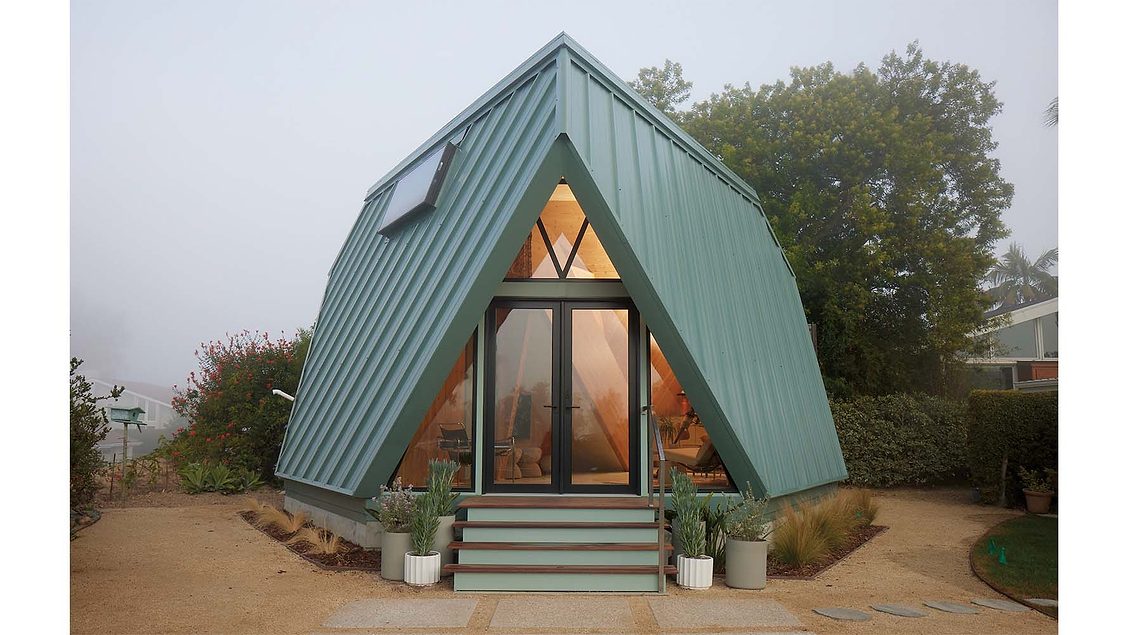
Photo by Andy Cross and Cody Cloud. Architectural Record.
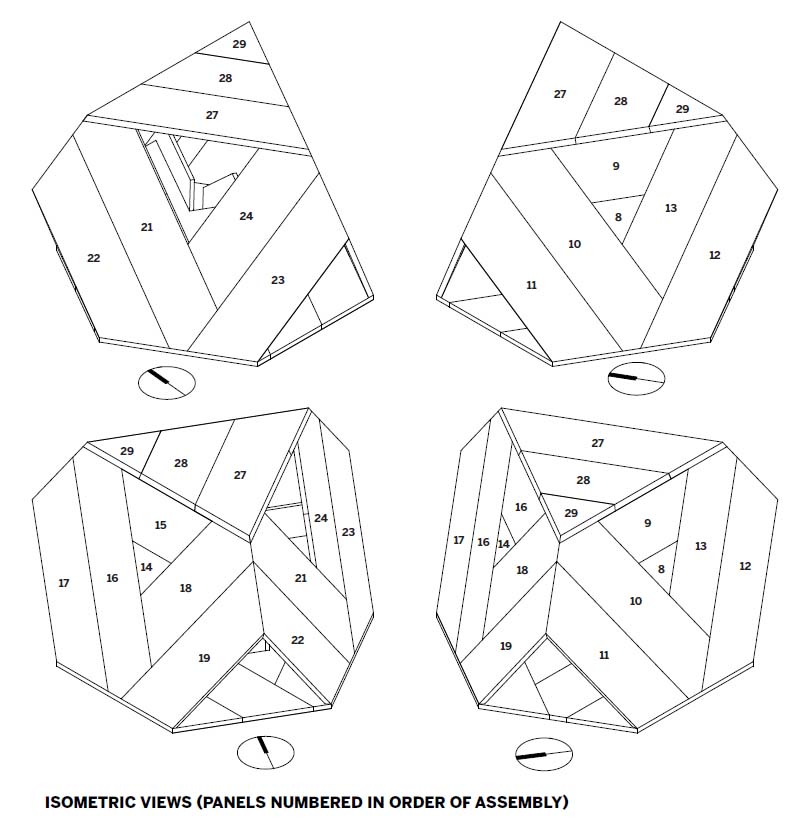
In the backyard of their 1962 Palmer and Krisel house in San Diego, architect Daniel López-Pérez and his wife Celine Vargas completed the first Polyhaus in 2024: a 540-square-foot, two-story accessory dwelling unit made from 64 individually cut cross-laminated timber panels, assembled by a three-person crew in three days. Total cost including permits: $300,000. Total schedule from site work to key: 12 weeks. Architectural Record covered it in January 2025 as a patented system with potential to license to builders at scale.
What the structure actually is
Polyhaus is not a rectangular box. López-Pérez, who directs the architecture program at the University of San Diego, derived the form by starting with a cube and repeatedly truncating its edges until he reached the largest interior volume in the smallest footprint. The result is a truncated polyhedron, 17 feet 4 inches tall, with an eight-sided plan that looks nothing like most ADUs currently permitted in California.
The math behind the shape is what makes it buildable at a reasonable cost. The entire structure uses only 25 distinct panel shapes, each repeating across the 64-panel assembly. "The virtue of this truncated polyhedron shape is that we have 25 panel shapes that repeat themselves, so it reduces details immensely," López-Pérez told Architectural Record. The structural engineer, Fast + Epp of Vancouver, found that the nonlinear panel arrangement provides greater structural redundancy than a conventional stud-frame house.
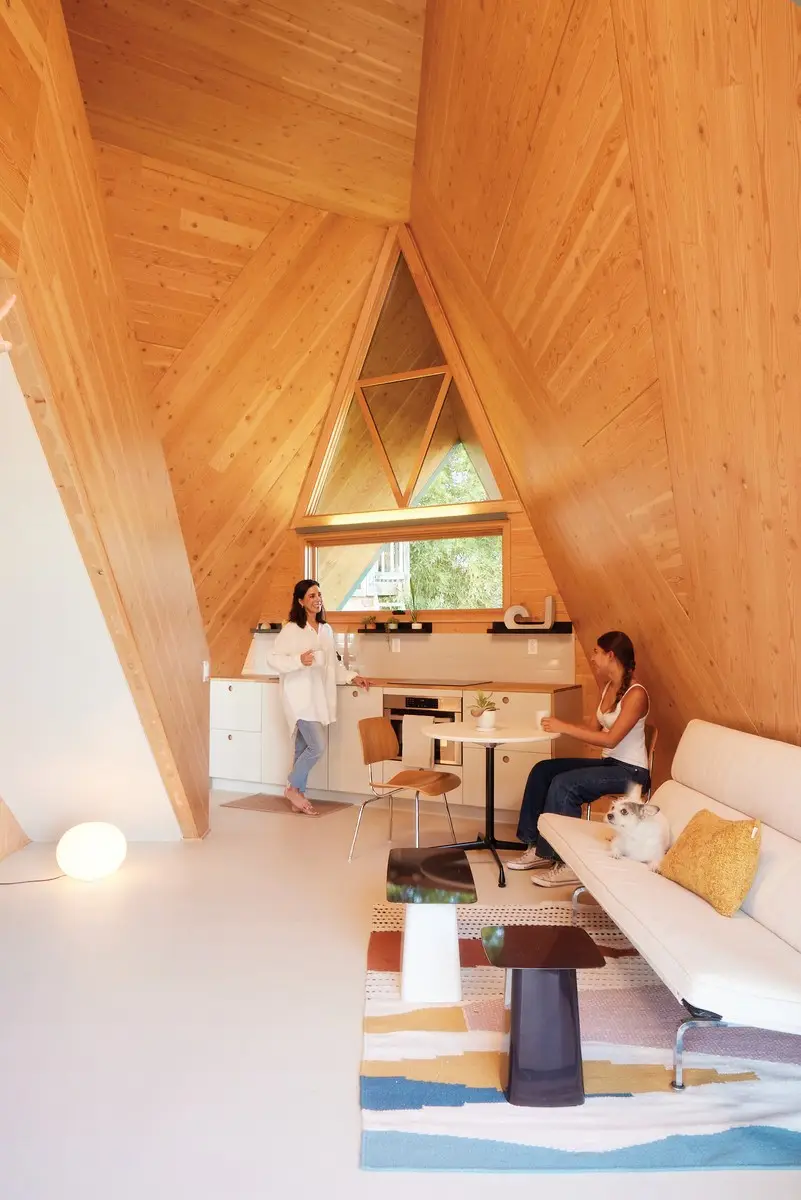
The panels are Douglas fir cross-laminated timber (CLT) produced by Vaagen Timbers in Colville, Washington. Floor panels run five-ply at 7.5 inches thick; wall panels are three-ply at 4.5 inches. Kingspan insulated metal panels screw directly onto the CLT for the weather envelope. Two details cover the whole building: the bolted metal plate connections between structural panels, and the splines that slot panels together.
The real cost breakdown
If you are a building homeowner trying to figure out what a quality ADU actually costs in California, Polyhaus gives you a useful benchmark. Single-family construction in California runs $600 to $1,200 per square foot. Polyhaus came in at roughly $550 per square foot, comparable to a conventional stick-built ADU but in mass timber. That figure includes San Diego permitting fees and other development costs.
The labor split. About 40 percent of the $300,000 was labor, putting materials, permitting, and engineering at roughly $180,000. That ratio matters if you are building in a high-wage market or trying to understand where cost reductions in a scaled system might come from.
The foundation was a concrete stem wall, one week of site prep. The team also pre-permitted a version that sits on 26 earth screws instead of poured concrete. Vargas estimated that change would cut the total schedule to eight weeks or less. A shorter gap between site work and first occupancy matters for homeowners counting on rental income to offset construction debt.
Floor plan and what it rents as
The 440-square-foot ground floor holds a living room, kitchen, bathroom, and a nook for a desk and washer and dryer. The 100-square-foot mezzanine is the bedroom. One bedroom, one bath, 540 square feet: that is the most common ADU configuration on the California rental market and the footprint that tends to produce the fastest payback on construction costs relative to larger builds.
The system is patented. López-Pérez and Vargas plan to license the technology to local builders rather than operate as a general contractor. If that model works, builders with existing permitting relationships in their city could offer the system to homeowners without shipping a finished unit from out of state. As of the January 2025 Architectural Record coverage, no licensed builders had been announced and the rollout was described as the next step for the company.
What to watch if you are considering it
As of January 2025, Polyhaus was not pre-approved in any California city. The first build went through standard San Diego plan check. San Diego's permitting environment for detached ADUs is relatively practical compared to some coastal cities further north. If you are in Los Angeles or the Bay Area, expect a first-time plan review on an unfamiliar structure, which adds time and usually adds cost.
The larger housing argument López-Pérez makes is about density: bungalow courts with six or more Polyhaus units on a single infill lot, filling the gap between apartment buildings and detached houses, serving multigenerational families at different income levels. California's ADU laws, progressively loosened since 2016, make that kind of development legally feasible in many jurisdictions already. Whether the licensing model actually reaches that scale is still unresolved. What is documented is that CLT is now costed and built at the ADU scale in California, with every dimension, schedule, and dollar amount published in Architectural Record.
If you are building or evaluating a detached ADU in California and want to compare contractors and pre-approved plan options, A-du's build marketplace connects you with licensed builders and plan sources across the state.