Cover Architecture's Moongate ADU Frames Altadena Through a Circular Aperture
Chris Koss, AIA|Published September 22, 2024|Last updated June 10, 2026
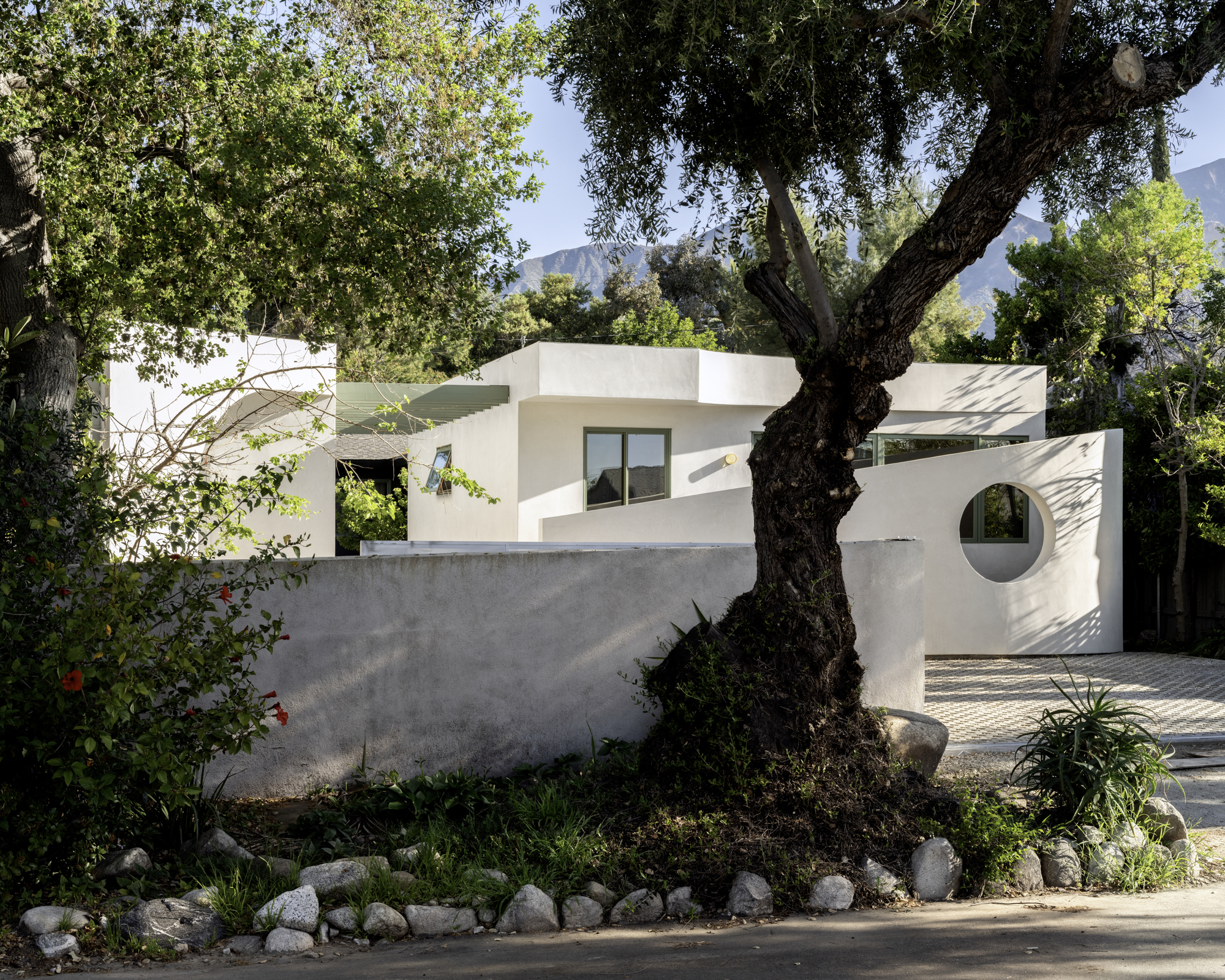
Cover Architecture's 620 sf Moongate ADU in Altadena, designed by principal Mike Wang for his mother and her partner, uses a sloped partition wall with a circular aperture to mediate between street and dwelling.
Photographs by Leonid Furmansky for ArchDaily.
The Moongate ADU, completed in 2024 by Cover Architecture, is one of the more quietly confident pieces of small-footprint residential design to land in Altadena in recent years. Principal architect Mike Wang designed the 620-square-foot dwelling for his mother Pei and her partner Dan, both former professors, to enjoy their retirement in close proximity to Mike and his young family in the primary house on site. The street-facing sloped partition wall, punctured by a single large circular opening, is the move that named the project. It is also a useful answer to a question more LA ADU owners are starting to ask: how do you treat the front of an ADU when it is visible from the street, not buried in a backyard?
The project
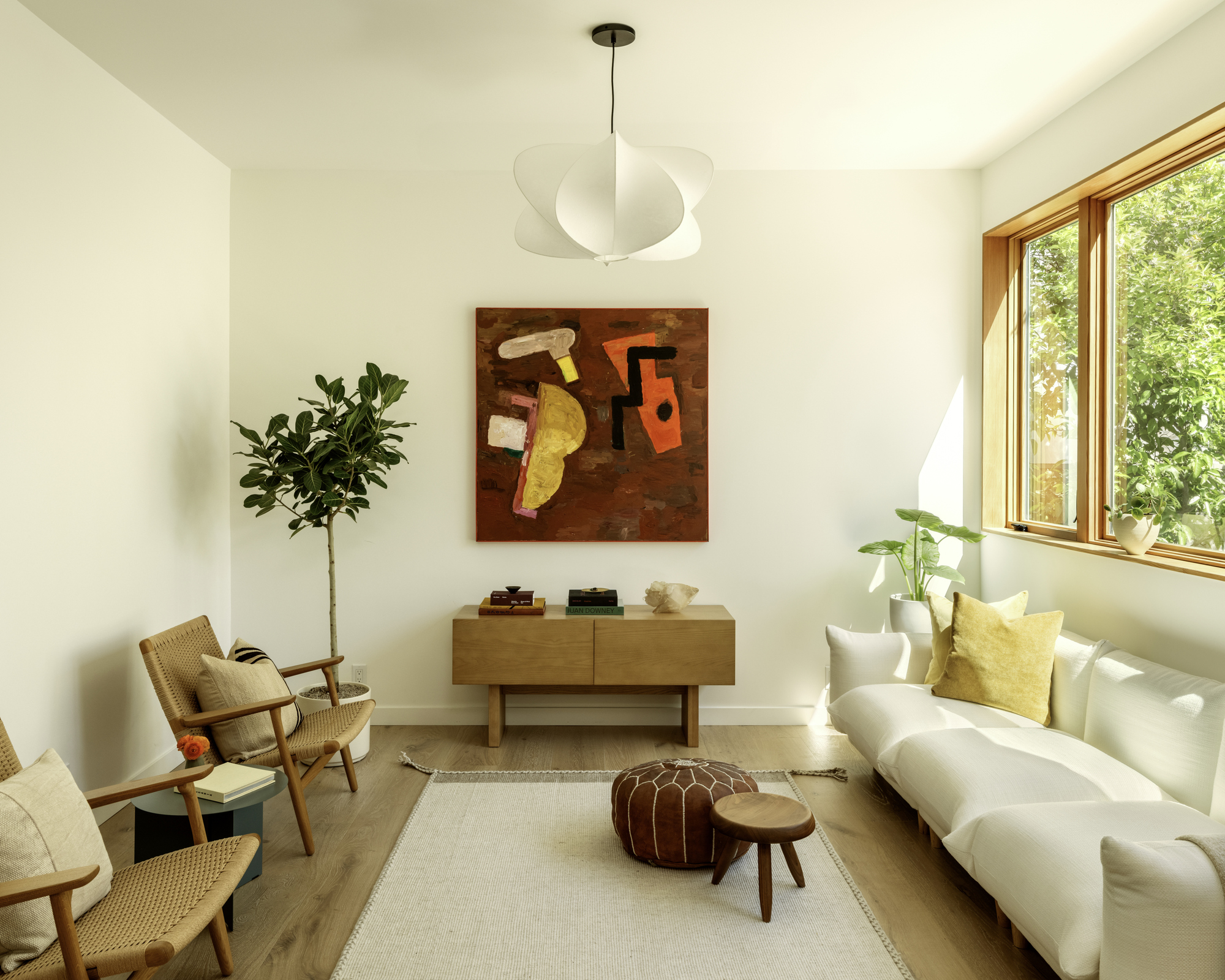
620 square feet, single story, residential infill. Per the project description on ArchDaily, the Moongate ADU is a single-story dwelling on a single-family lot in Altadena. The plan is built around the sloped partition wall and its moongate cutout, which acts as a threshold device: it conceals the interior from the street while framing a controlled view through to the entry sequence. Inside, the unit is designed for two adults in retirement, which means the program leans toward generous shared spaces (a living-kitchen-dining zone, one good bathroom) rather than the multi-bedroom layout typical of a backyard ADU intended for resale or rental.

The street move
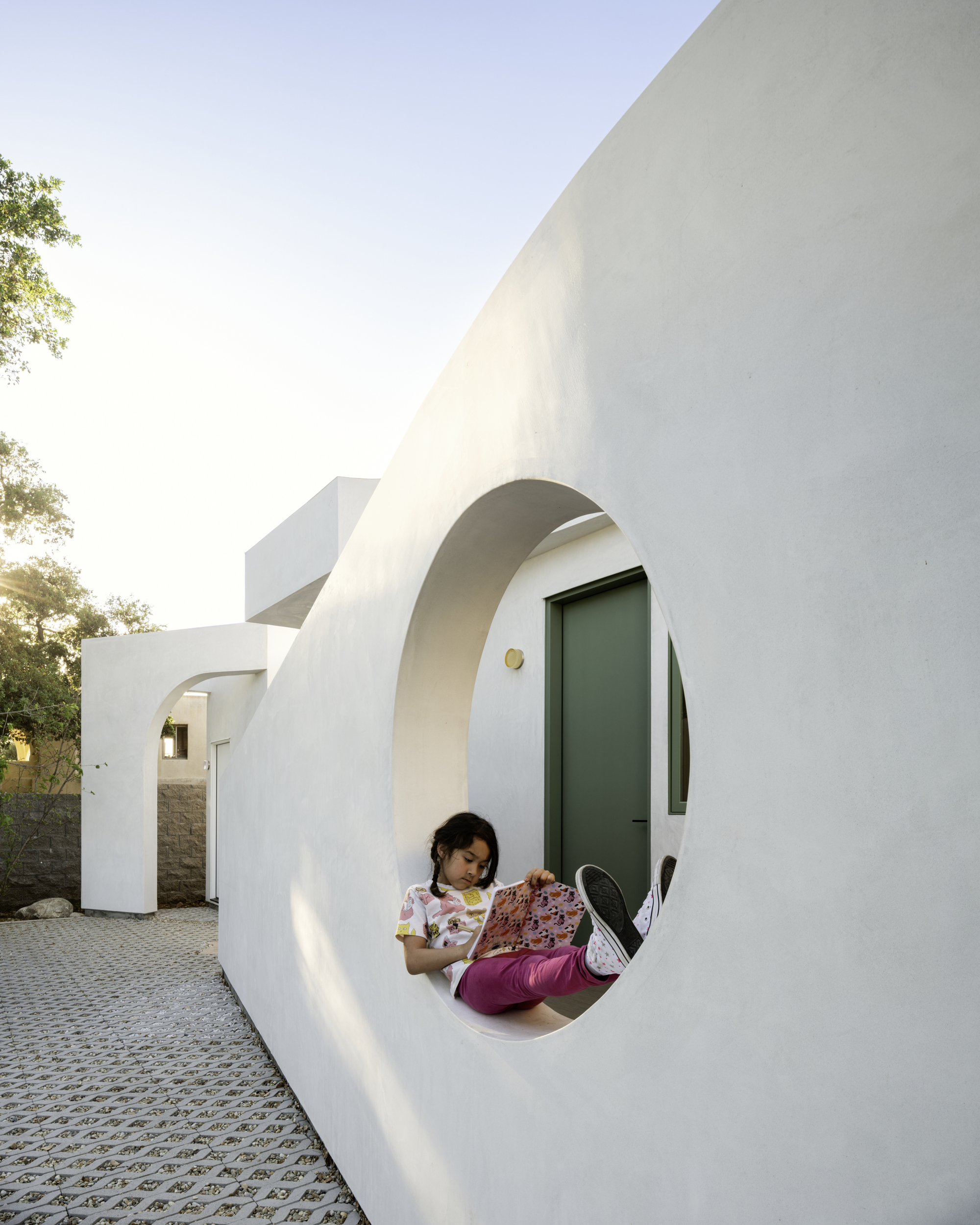
The moongate. A circular opening in a screen wall is an old Chinese garden device, traditionally used to frame a view between courtyards. Cover Architecture's adaptation uses the same logic for a contemporary ADU: the sloped partition reads as a continuous solid mass from across the street, but the circular cutout creates a controlled aperture into the entry and yard beyond. From the public sidewalk you see a slice of the interior life of the unit without compromising the privacy of either dwelling on the lot.
Why this matters. Most LA ADUs are tucked behind the primary house, in the rear of the lot, invisible to the street. That is the default layout because of setback rules and because the legal lineage of the ADU treats it as a backyard accessory. But on infill lots where the primary house already pushes the front setback, or on parcels where the geometry favors a street-facing ADU, the architectural question becomes: how do you do this without producing a defensive, blank-faced box? Moongate is one answer.
Why it matters for LA ADUs
The multigenerational use case. The Moongate ADU was built for the architect's mother and her partner. That is not a unique use case in LA. The Census American Community Survey data has shown a steady rise in multigenerational households across LA County since 2015, and ADUs are the cleanest legal mechanism for housing adult parents on the same lot as their grown children. For owners considering a similar arrangement, projects like Moongate provide a vocabulary: small footprint, single-story, sized for two adults, designed with privacy from but proximity to the main house.
Cover Architecture's broader practice. Cover is one of the LA-area firms that has taken ADU work seriously as a core practice area rather than as a sideline. The studio's portfolio shows what an architecturally serious ADU looks like when the constraints (small footprint, ministerial permit, modest budget) are treated as a design brief rather than as a list of complaints. For an LA owner considering an ADU and weighing whether to use a pre-approved plan or hire an architect, the existence of firms like Cover changes the math: the premium for architect-designed work is rewarded in the visible street presence and in the resale story.
What to take from this
Street-facing ADUs deserve a thesis. If your lot geometry pushes you toward a street-facing ADU, do not default to a generic stucco box. A street-facing ADU is a public-facing piece of architecture in a way that a buried backyard unit is not. Either commission a real design or pick a pre-approved plan that has been visually designed for street exposure.
Small can hold a lot. At 620 square feet, the Moongate ADU is below the 750 sf fee-exemption threshold (a meaningful cost saving) and below the typical 800 to 1,000 sf range that LA owners default to. For two-adult use, 620 sf is enough when the plan is right. Talk to the architect about programmatic priorities before defaulting to a larger footprint.
If you are considering a small-footprint or street-facing ADU in LA, A-du's marketplace connects you to architects who treat the ADU as a real architectural project.