California ADU Kitchen Layouts: Galley, L-Shape, and Single-Wall
Chris Koss, AIA|Published June 11, 2026
The kitchen is the hardest room to get right in a California ADU. In a 600 to 1000 square foot unit, one wrong decision wastes feet you cannot recover. Here is what each layout delivers.
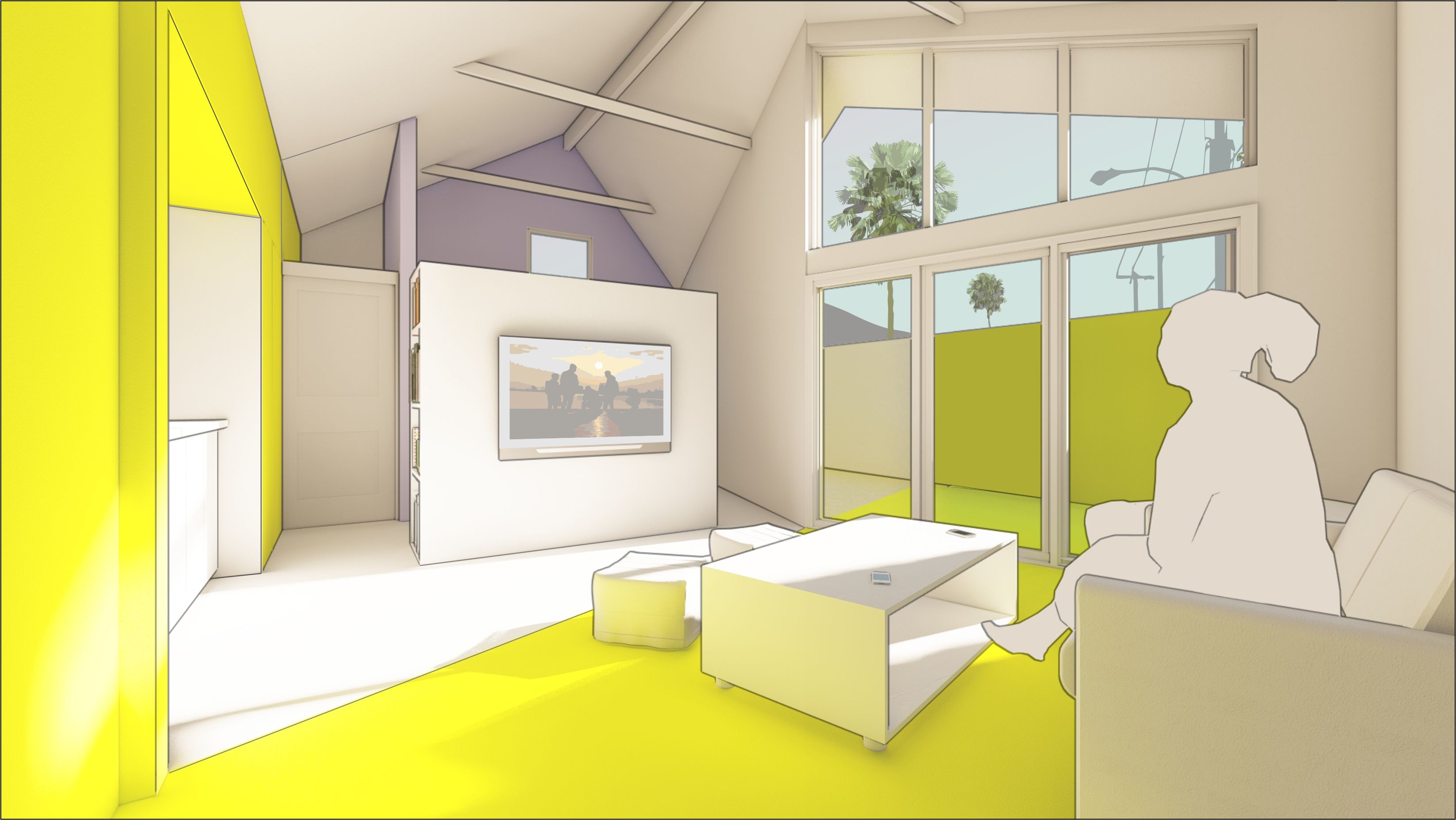
Interior and floor plan images via the LADBS YOU-ADU Standard Plan Program.
The kitchen is the hardest room to get right in a California ADU. In a 600 to 1000 square foot unit, one wrong decision (a counter that blocks the corridor, a cooktop placed against the wall that would have been your best light source) costs you square footage you cannot get back. Three layouts consistently work in this size range: galley, L-shape, and single-wall. Each has a clear case for it, and a clear case against it.
What California code requires before you design anything
A full ADU, whether detached or attached, must include "complete independent living facilities for one or more persons," including permanent provisions for "living, sleeping, eating, cooking, and sanitation" on the same parcel as the primary residence. This requirement is in Government Code Section 66313. In practice, that means a real kitchen: a sink, a cooktop or range, a refrigerator, and mechanical ventilation that satisfies Title 24 of the California Code of Regulations. There is no ADU kitchen minimum square footage set by the state, but there are minimum clearances under the California Residential Code that govern counter depth, cooking clearance, and egress paths.
A junior accessory dwelling unit (JADU) gets a lighter standard. Under Government Code Section 66333, as amended by AB 1154 (effective January 1, 2026), a JADU is required only to include an "efficiency kitchen," which means a cooking facility with appliances, a food preparation counter, and storage cabinets of "reasonable size in relation to the size of the junior accessory dwelling unit." The code does not specify appliance sizes. This leaves real design latitude for a JADU kitchen: a two-burner induction cooktop, a compact under-counter refrigerator, a 24-inch counter run, and four linear feet of upper and lower cabinet can all satisfy the statutory definition.
The efficiency vs. full kitchen split matters for layout choice. If you are finishing a detached 800 SF ADU intended for rental, the tenant will expect a full range, a full-size refrigerator, and functional storage. If you are carving a 350 SF JADU out of your existing home for a family member, a single-wall efficiency kitchen is both code-compliant and sensible.

Galley layout: the right call for a linear footprint
In a galley kitchen, counters run along two parallel walls with a working corridor between them. If your ADU is long and narrow (a converted garage, a detached unit built along a side yard fence line), galley is almost always the right call. The cooking triangle forms naturally: sink, cooktop, and refrigerator all fall within a three to five foot reach. Dishwasher door swing and refrigerator clearance work without overlap.
The standard minimum corridor width for a single-cook galley is 36 inches clear. For two people to use the kitchen at the same time, 42 to 48 inches is more comfortable. In an ADU under 700 SF, that galley corridor often doubles as circulation to the bedroom and bathroom, so you are designing for both traffic flow and kitchen function at the same time.
One placement detail that gets missed: putting the sink and cooktop on the same wall (the "work wall") keeps wet and hot tasks on a single run. The opposite wall becomes pure storage and counter surface. Splitting sink and cooktop to opposite walls means you carry hot pots across the corridor, which is both inconvenient and a safety issue in a tight space.
Galley kitchens add cabinetry linear footage relative to single-wall, but the layout is structurally simple. If you are working from a pre-approved plan such as the LADBS YOU-ADU (455 SF, one bedroom, free to any Los Angeles applicant per LADBS), the floor plan already reflects a compact arrangement that fits the building envelope without structural complications.
L-shape and single-wall: when your floor plan decides for you
The L-shape kitchen occupies two adjacent walls and works well in an open-plan ADU where the kitchen is one zone of a larger room. In a 700 to 1000 SF unit, an L-shape typically gives you 10 to 16 linear feet of counter and storage across two runs. The corner is the one weak point: a pull-out cabinet or lazy susan helps, but the deep corner area is never as useful as straight linear footage. The payoff is that the cook faces into the living area rather than a wall, which makes the unit feel more open.
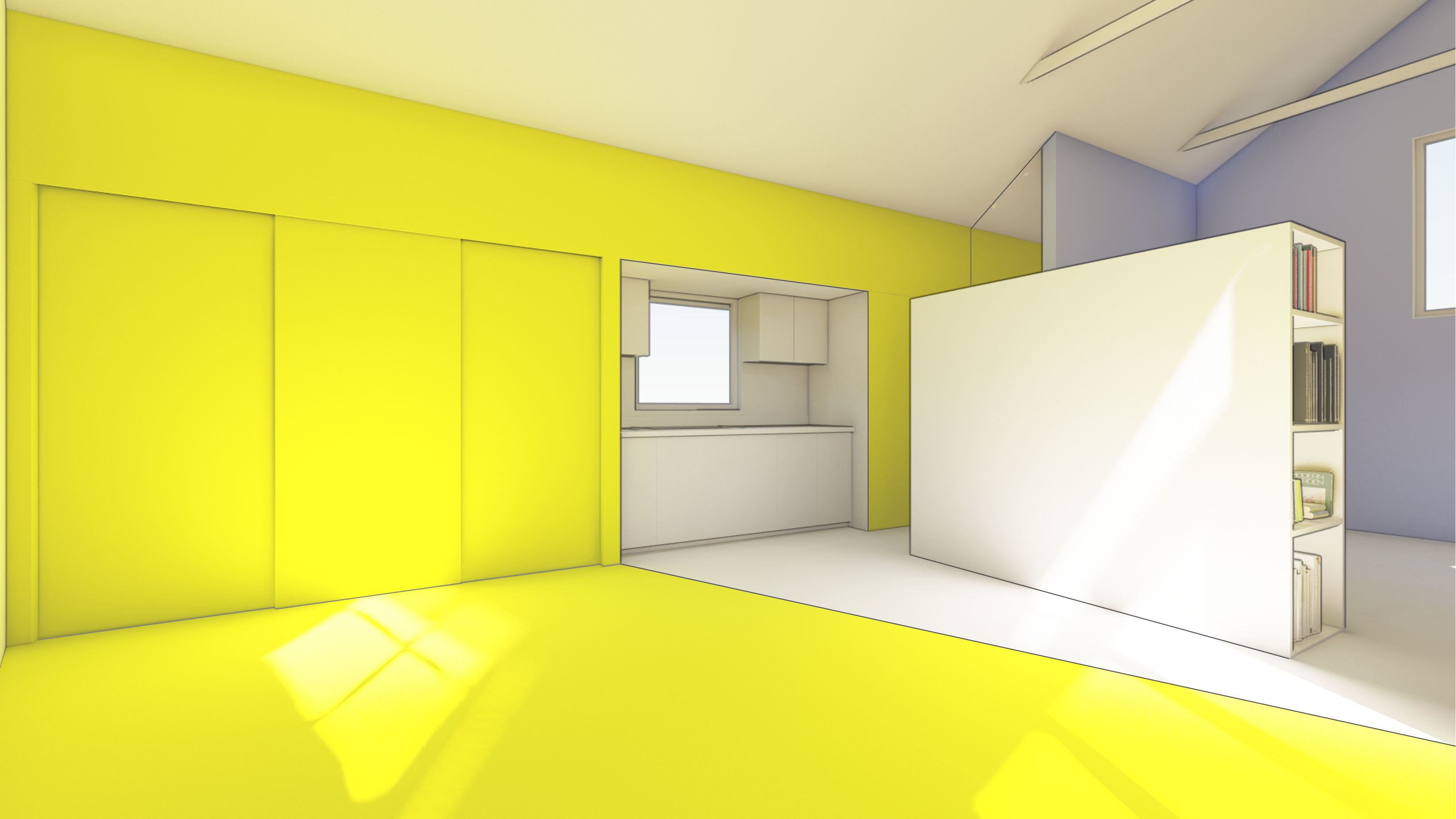
The single-wall kitchen puts everything on one wall. In an ADU under 600 SF, or in a JADU, this is often the only viable option. Cost is lower (fewer cabinets, one plumbing wall, one range hood location). Floor space freed by eliminating the island or second run can go to a fold-out dining table or a small sofa. The tradeoff is limited counter space and the absence of a proper cooking triangle: you work linearly rather than triangularly, which means more reaching and pivoting.
For JADUs specifically, the single-wall is close to the default. A 400 to 500 SF JADU carved from a single-family home typically has one exterior wall available for the kitchen (where the sink drain and range hood penetration are most practical) and one corridor to the entrance. Single-wall along the exterior wall is the path of least resistance for both plumbing and ventilation rough-in.
Four practical points for furnishing and styling homeowners
If you are finishing out a California ADU kitchen right now, these four details come up repeatedly and are worth addressing before you order cabinets or tile.
Counter depth, not length, is where you recover space. Standard counter depth is 25 inches (a 24-inch cabinet with a 1-inch overhang). Specifying 12-inch upper cabinets instead of 15 to 18-inch deepens the visual breathing room without removing meaningful storage. In a galley with a 40-inch corridor, every half-inch of depth reduction per wall is real clearance you can feel.
Appliance sizing shifts the whole equation. A counter-depth refrigerator (roughly 24 to 25 inches deep versus a standard 30 to 32 inches) recovers 6 to 8 inches of floor clearance in a galley. A 24-inch range instead of a 30-inch saves another 6 inches of linear wall. These two choices have the biggest spatial impact per dollar of any decision in the kitchen.
Title 24 ventilation is not optional and should be scoped early. California's Title 24 energy and indoor air quality requirements call for mechanical ventilation in kitchens. For an ADU this typically means a range hood that vents to the exterior. If your layout places the cooktop against an interior wall (common in an L-shape), you need a duct chase to reach the exterior wall or roof. That penetration should be in the permit drawings from the start, not treated as a field decision later.
Finish choices affect perceived size as much as any fixture. Light matte cabinet fronts, integrated appliance panels, and a continuous countertop material (rather than a tiled backsplash that breaks the wall into segments) all make a compact kitchen read as one coherent surface rather than a collection of small pieces.
If you want to compare floor plans across pre-approved ADU programs in Los Angeles, San Jose, Pasadena, and Riverside before committing to a layout direction, A-du's build marketplace lets you browse and filter those city-provided plans by size and bedroom count.