How California's Ministerial ADU Approval Works in Practice
Chris Koss, AIA|Published June 16, 2026
California's ministerial ADU permit process gives local agencies hard deadlines: 15 business days to determine completeness, then 60 days to approve or deny. Here is how the clock works after SB 543.
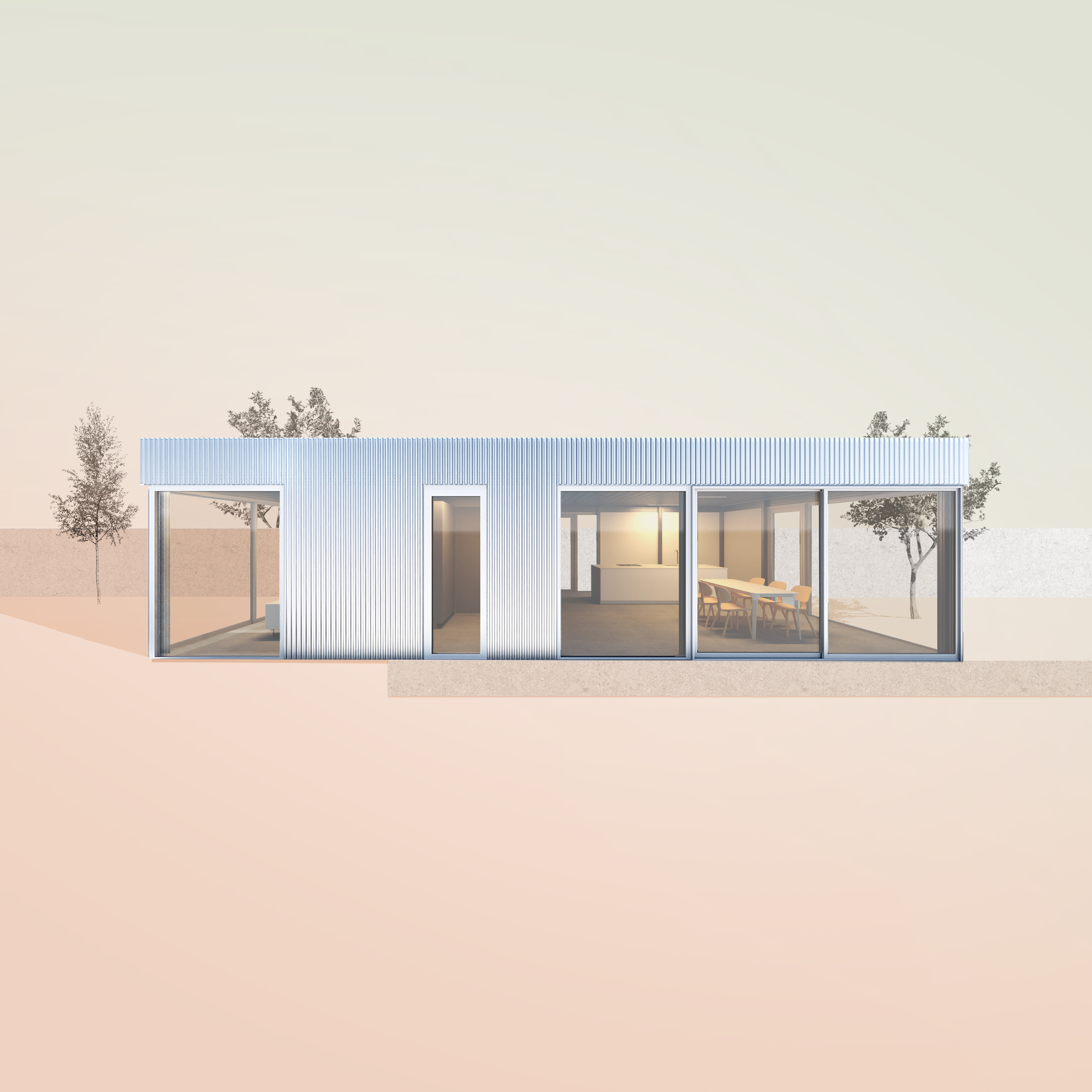
IT House "Bar" ADU, a pre-approved configuration in the Los Angeles Standard Plan Program catalog. Los Angeles Department of Building and Safety.
If you're planning your first ADU in California, one of the first things your architect will tell you is that state law requires "ministerial" approval. That word matters. It means your city cannot hold a public hearing on your project, cannot require CEQA review, and cannot apply judgment about whether your ADU fits the neighborhood. Since January 1, 2026, ministerial approval also comes with hard, enforceable deadlines: 15 business days for a completeness determination, then 60 calendar days for a decision. If local agencies miss those windows, the law provides automatic consequences. This is how the process actually works, and what to do when it doesn't.
What "ministerial" means and what it doesn't
Ministerial. In California planning law, a ministerial action is one where an agency applies fixed, objective criteria to a project and issues a yes or no. There is no discretion to weigh competing interests, no public hearing, and no CEQA review. ADU applications have been ministerially approved under Government Code Section 65852.2 since reforms starting in 2020 removed most local barriers to ADU construction statewide.
In practice, ministerial means your city checks whether your project meets its objective development standards: setbacks (typically 4 feet from rear and side property lines for detached ADUs), lot coverage limits, height (usually 16 to 25 feet depending on proximity to the property line), parking exemptions within a half-mile of transit, fire sprinkler rules (not required if not required for the primary home), and Title 24 energy standards (including solar panels on new detached construction in Los Angeles). What your city cannot apply: any standard that requires a judgment call about design character, neighborhood compatibility, or aesthetics.
The critical word is "objective." If a city's ADU ordinance contains standards that require subjective interpretation, HCD can challenge it, and the ordinance can be voided. More on that below.
The two clocks that govern your application
Senate Bill 543, effective January 1, 2026, codified two timelines that now define what accountability looks like for ADU applications statewide.
The 15-business-day completeness clock. When you submit an ADU application, the local agency has 15 business days to issue a completeness determination. If items are missing, the agency must provide a written list. On resubmittal, the agency may only review the items it flagged previously. No new objections after the fact. If the agency does not issue any determination within 15 business days, the application is automatically deemed complete by operation of law, and the 60-day clock begins. SB 543 also created a formal statutory right to appeal an incompleteness determination to the planning commission or governing body, a right that previously did not exist under state law.
The 60-day approval clock. Once an application is deemed complete, the agency has 60 calendar days to approve or deny it. If they miss that deadline, the application is deemed approved. This shot clock existed in prior law, but SB 543's completeness rules prevent agencies from stretching the starting line by bouncing applications back indefinitely for minor missing items.
One practical note on sizing. SB 543 also clarified that the 800-square-foot threshold for state-exempt detached ADUs refers to interior livable space only. Exterior walls, stairs, and mechanical spaces do not count. For a project near that threshold, this is a real increase in buildable area without triggering the full local impact fee schedule.
What to do when a city stalls
Real applications hit stalls. Here is the practical toolkit for building homeowners and first-time ADU clients who need to move a permit forward.
Check the HCD enforcement dashboard. The California Department of Housing and Community Development maintains a public Technical Assistance and Enforcement Letters dashboard tracking every local jurisdiction that has received a TA letter for ADU ordinance deficiencies. If your city is on that list and did not correct its ordinance within 30 days of HCD's deficiency letter, that ordinance may be null and void by statute. When the local ordinance is void, state ADU standards apply directly, which are generally more permissive than most city rules.
Know the null-and-void rule. Under 2025 amendments, any ADU ordinance not timely submitted to HCD for review after adoption, or not corrected within 30 days after HCD identifies deficiencies, is null and void as a matter of law. The city then applies state standards directly. This is a meaningful shift from prior years when HCD's role was largely advisory, with limited enforcement teeth.
Understand what "deemed approved" means in practice. If the 60-day clock expires without a decision, you can formally demand the permit be issued. SB 808, signed in 2025, expedites judicial review of housing development project denials in California. A city that refuses to process a deemed-approved ADU application now faces a faster legal path for the applicant to force a resolution.
Document the timeline. If you are a first-time ADU client approaching the 15-day or 60-day deadlines with no agency response, document the submission date, the statutory deadline, and every communication. Your architect or permit expediter can use SB 543's completeness framework to formally notify the agency in writing that the deemed-complete clock has already started.
If you want to see how permit timelines and fee structures compare across specific California cities before you start your project, A-du's permit fee calculator pulls current fee tables and generates a project-level estimate for your city.