California's Pre-Approved ADU Plans: City Programs, Side by Side
Chris Koss, AIA|Published June 15, 2026
Los Angeles, Riverside, San Jose, and San Mateo County each run a pre-approved ADU plan program. What is in each catalog, what it costs, and how A-du's plan map helps you find yours.
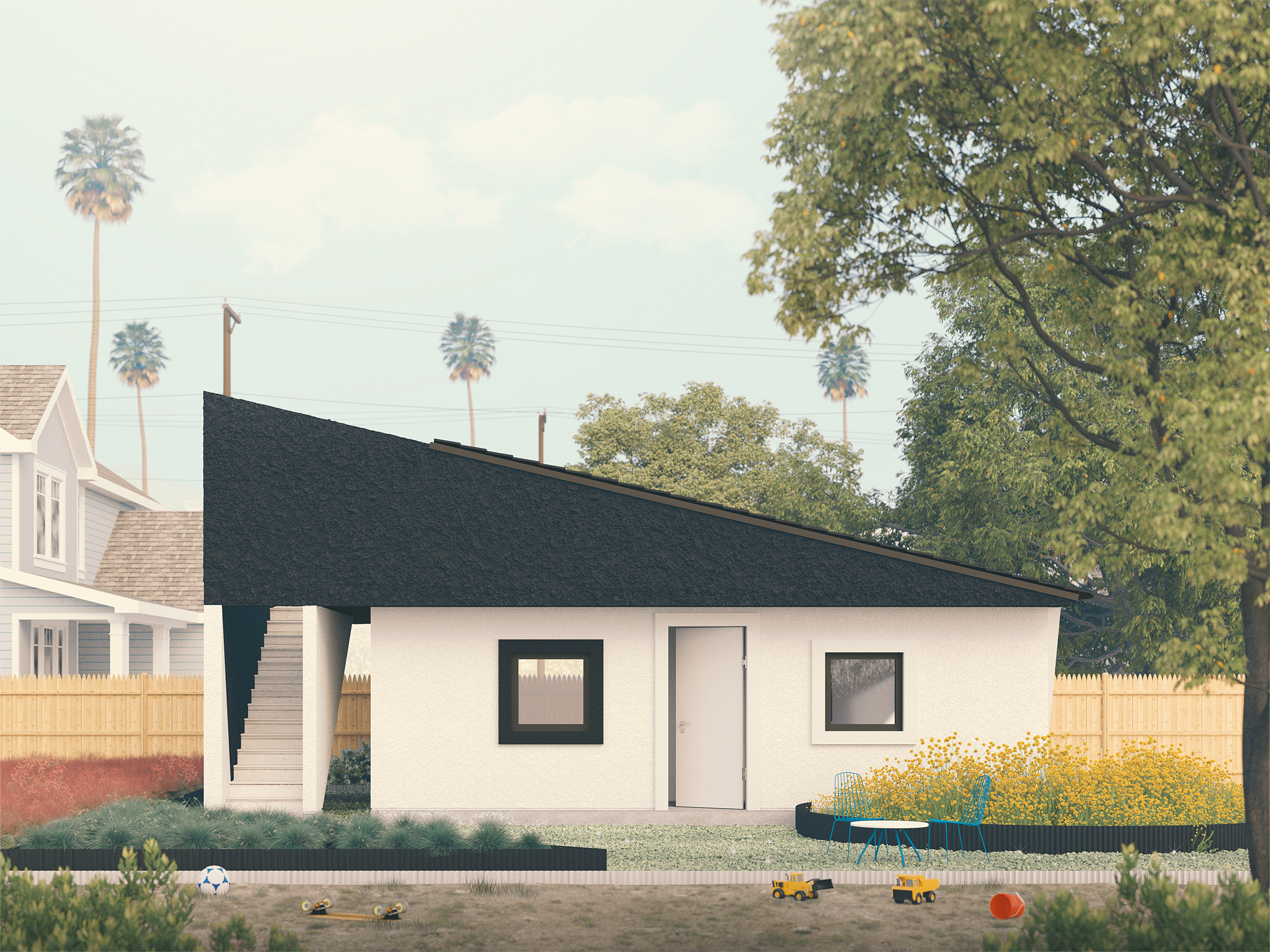
Jennifer Bonner's LEAN-to ADU, one of the architect-designed plans in the Los Angeles Standard Plan Program. Los Angeles Department of Building and Safety.
California gives every city 60 days to approve or deny a complete ADU permit application. That is the statutory floor, set by AB 68 (2019). Pre-approved plan programs exist to shrink that window further. Los Angeles, Riverside, San Jose, and San Mateo County each run a catalog of architect-reviewed plans that let the building department skip the generic code review and move straight to site-specific conditions. The difference between cities is real: the plans in each catalog vary by style, square footage, and licensing structure. If you are researching an ADU and have not compared the local catalog to a custom design yet, that comparison is worth doing before you hire anyone.
What a pre-approved plan actually gives you
A pre-approved plan is a set of construction documents that a building department has already reviewed for structural, energy, and life-safety code compliance. When you submit it for a permit, the department reviews only site-specific conditions: your setbacks, utility hookups, and lot coverage. The generic code review is already done.
That narrows the plan check queue considerably. Riverside's DWELL program states that its pre-reviewed plan sets "streamline the permit process while reducing preconstruction costs including architecture and engineering fees." That language matters because soft costs on an ADU project typically run $5,000 to $15,000 before construction starts, and anything that removes a fee category is real money.
The trade-off is a fixed catalog. Dimensions, layouts, and architectural style are set. You can customize finishes, but you cannot move walls. If the nearest catalog option in your city is a 2-bedroom, 800-square-foot ranch and you wanted a 1-bedroom, 650-square-foot studio, you either adapt to the catalog or go custom. Most homeowners do not know how specific the catalog gets until they sit down and compare it to their lot constraints. Doing that comparison early, before you have paid an architect a retainer, avoids the most common mismatch.
How the four main city programs differ
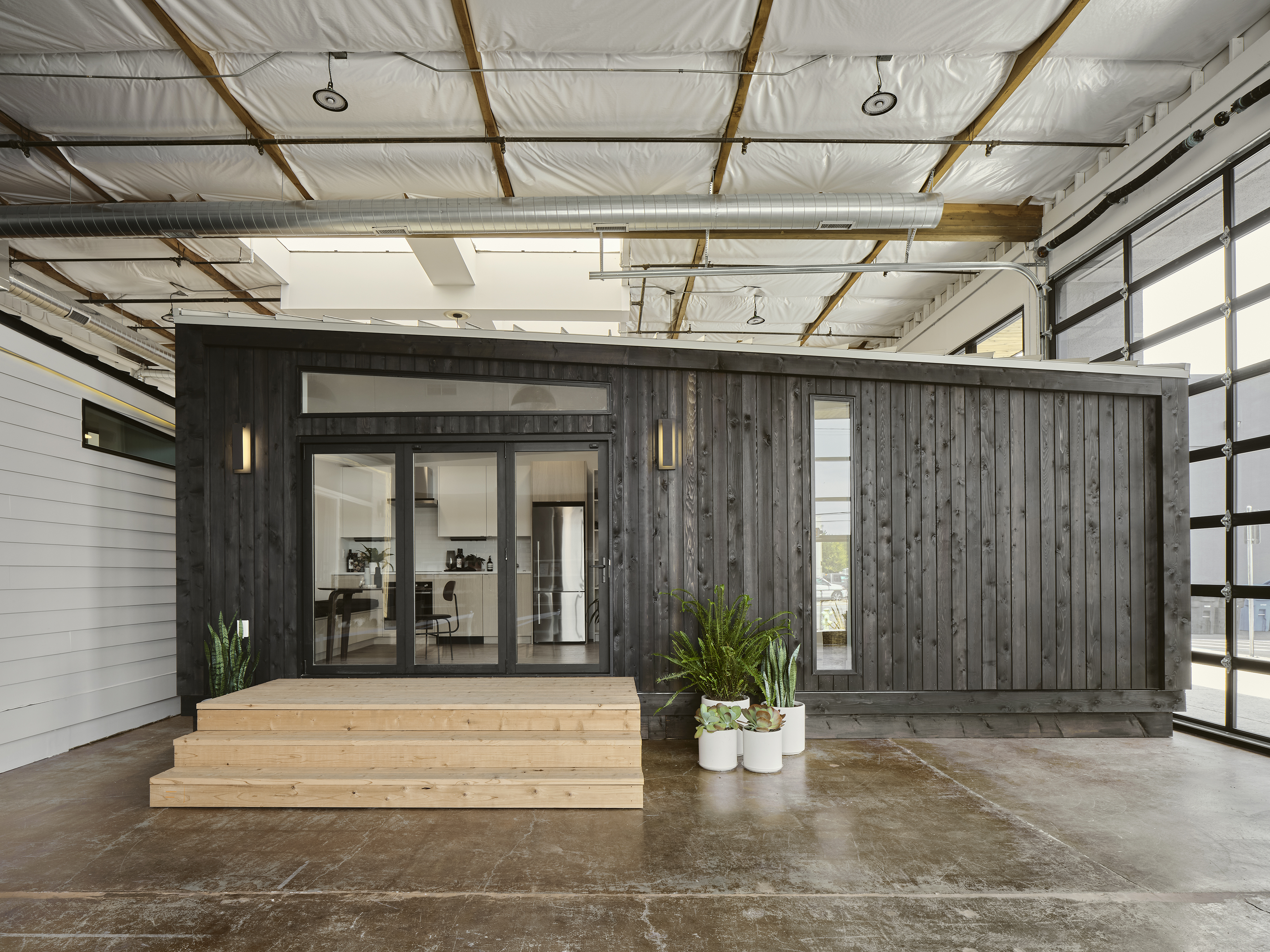
Los Angeles (LADBS Standard Plan Program). The LADBS Standard Plan Program offers multiple architect-designed ADU plans from firms including Jennifer Bonner, Abodu, and First Office. One design, the YOU-ADU, is free and city-provided at approximately 455 square feet. The others are licensed through the contributing architecture firms. Permit plan check on a Standard Plan runs faster than a custom submittal because LADBS has already reviewed the design for code compliance, leaving only site conditions for the permit office to clear.
Riverside (DWELL Riverside). Riverside's DWELL program offers pre-reviewed plan sets in craftsman, ranch, and Spanish revival styles. The 2-bedroom ranch option comes in at 800 square feet. Riverside provides DWELL plan sets at no cost and waives architecture and engineering review fees, which directly lowers your pre-development spend. The One Stop Shop at 951-826-5800 can walk you through lot-specific questions before you select a plan.
San Jose. San Jose runs one of California's longer-standing pre-approved plan programs, with designs reviewed for local soil and seismic conditions. San Jose was also the first California city to opt in to AB 1033, the 2023 law allowing homeowners to sell an ADU as a separate condominium on the same lot. A pre-approved plan in San Jose can, in theory, eventually become a starter home for a buyer who otherwise could not afford a full-sized house in one of the state's priciest markets.
San Mateo County and others. San Mateo County, Encinitas, and Pasadena each run their own catalogs with different plan size ranges, styles, and fee structures. What they share is the same core benefit: a building department that has already completed the generic code review, so your permit process starts at a different point than a custom design would.
Four questions to answer before you pick a plan
Once you have identified the catalog for your city, dimensions are the obvious thing to look at, but they are not the only variable.
Does the plan fit your lot? Setback requirements, lot coverage maximums, and utility easements vary by parcel. A plan that works on a flat 6,000-square-foot standard lot may not work on a sloped hillside lot, even within the same city. Riverside's DWELL program is designed for standard residential parcels. Hillside lots in Los Angeles often require soils reports regardless of which plan source you use.
What does it cost to license the plan? The YOU-ADU in Los Angeles is free. Most other LADBS Standard Plans require a licensing fee paid directly to the architecture firm. In Riverside, plan sets are city-provided at no cost. In San Jose, costs vary by design. This matters when you are comparing the true soft cost of a pre-approved plan against hiring a local architect who already knows your permit office.
How current is the catalog? California's Title 24 energy standards update on a three-year cycle, and the 2025 standards took effect January 1, 2026. A pre-approved plan reviewed for 2022 energy compliance may need an addendum before it clears permit today. Ask the building department when the plan was last reviewed for code before you commit to a design.
Is the plan compatible with a prefab build? Some catalogs, including LADBS, include designs from prefab manufacturers like Abodu. If you want a factory-built unit, checking whether the catalog has prefab-compatible options narrows your search considerably and can affect your contractor shortlist.
Where A-du's plan search fits in
Comparing catalogs across cities manually takes time. A-du aggregates pre-approved programs across California so you can filter by location, square footage, and bedroom count without opening a separate browser tab for every building department. If you are in a city with a pre-approved program, A-du shows which designs apply to your specific parcel and connects you with architects familiar with that city's permit office if you want to go custom instead.
If you are researching whether an ADU makes sense for your property, A-du's plan map is a good first stop before you talk to a contractor.