California Coastal ADU Guidance: What SB 1077 Means for Your Project
Chris Koss, AIA|Published June 4, 2026|Last updated June 10, 2026
The Coastal Commission's final ADU guidance under SB 1077 is due this month. Here is what the bill requires, what changes for coastal property owners, and what to watch when it drops.
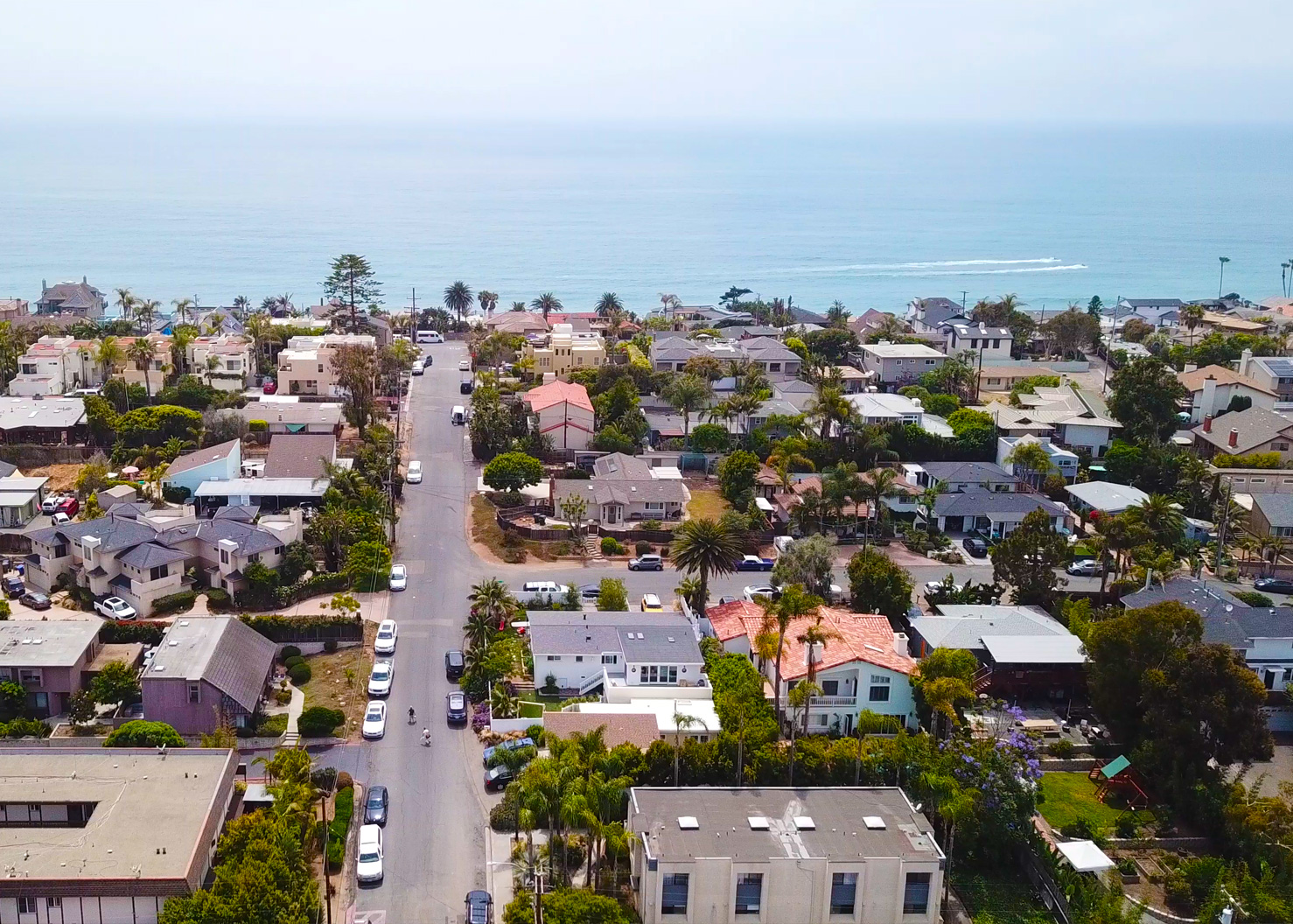
SB 1077 guidance documentation via California Coastal Commission; hero image via Ohana Dwellings.
The California Coastal Commission is required by law to release final written guidance on ADU permitting in the coastal zone by July 1, 2026. That deadline is now less than four weeks away. The guidance, mandated by Senate Bill 1077 (Chapter 454, Statutes of 2024), is the first statewide effort to reconcile California's aggressive ADU expansion with the Coastal Act's permitting requirements. If you own property anywhere along the California coast and have been waiting for clarity before starting a project, this is the moment you have been watching for.
How the coastal zone created a two-tier permit system
California has spent the last several years systematically removing barriers to ADU development inland. Statewide, most ADU applications now qualify for ministerial approval within 60 days, and AB 1332 requires every local agency to maintain a pre-approved plan program with a 30-day review path for projects using those plans. The coastal zone operates under different rules.
Under the California Coastal Act, most new construction within the coastal zone requires a Coastal Development Permit (CDP) in addition to standard building permits, unless the project qualifies for a categorical exemption. A CDP adds time, fees, and uncertainty. Coastal ADU projects have historically taken 5 to 8 months to approve, compared with 3 to 4 months for comparable inland projects, according to Pacific Beach Builder's analysis of local coastal permitting overhead. The cost difference is significant: roughly $2,000 to $5,000 in additional CDP fees alone, with total additional overhead reaching $18,000 to $40,000 when professional time and extended financing carrying costs are included.
AB 462, which took effect on October 15, 2025, imposed a 60-day deadline on CDP review for ADUs in cities with a Certified Local Coastal Program. That was a meaningful step. But a 60-day deadline does not help if neither the homeowner nor the city planner knows how to structure an application that satisfies both state ADU law and Coastal Act requirements simultaneously. That is the gap SB 1077 was written to close.
What the bill requires the Commission to produce
SB 1077 was authored by Senator Catherine Blakespear and signed into law on September 22, 2024. It directs the California Coastal Commission and the Department of Housing and Community Development to jointly develop written guidance for local governments. The target is Local Coastal Programs, the jurisdiction-specific plans that govern what can be built in the coastal zone. Once a city or county updates its LCP using the Commission's guidance, certain ADU project types can qualify for simplified or ministerial approval rather than full discretionary CDP review.
The Coastal Commission has published a clear timeline for this effort:
- Fall 2025: Public outreach and input from local governments and the public
- Fall to Winter 2025: Interagency coordination and draft guidance development
- April 13, 2026: Public draft released, public comment period opened
- May 2026: Coastal Commission workshop at its monthly hearing
- June 2026: Final ADU Guidance release
The public comment period has closed. The workshop at the May 2026 hearing has happened. The final guidance is due this month.

What this means for coastal homeowners right now
If you are a first-time ADU client with a lot in Pacific Beach, Santa Monica, Malibu, Bolinas, or any other coastal jurisdiction, the guidance matters in two phases.
Phase one: the guidance drops. The Commission releases the written guidance document. This immediately gives local governments a clear template for what LCP amendments should say. But cities still need to formally amend their LCPs, which involves their own planning commission review and public hearings. A city that moves quickly could adopt conforming LCP amendments within a few months after the guidance releases. Others may take longer.
Phase two: your city amends its LCP. Once your city's LCP incorporates the standards the Commission's guidance establishes, qualifying ADU projects in that city move to a ministerial review track. The 60-day clock AB 462 already established becomes the actual timeline, not a theoretical backstop against indefinite delay.
In the interim, a few cities had already done this work ahead of the statewide guidance. Santa Cruz and San Mateo County each updated their LCPs to address ADUs before SB 1077 passed. If your city is in that group, you may already have a faster path. If your city has not touched its LCP in years, you are still on the legacy timeline until that LCP gets updated.
The rental math at the coast is what makes the permitting delay genuinely costly. Pacific Beach one-bedroom ADUs currently rent for roughly $2,500 to $3,500 per month; La Jolla units often reach $2,000 to $2,800 for a one-bedroom and exceed $3,500 for a two-bedroom. Every month of extra permitting time under the legacy process is a month of that rental income deferred. For a $2,800 unit, six extra months of coastal permitting overhead costs the homeowner roughly $17,000 in gross rent that never got collected.
Three things to watch when the final guidance drops
When the Commission releases the document, look specifically for these provisions. First, whether it creates a standard-form LCP amendment that cities can adopt by reference rather than drafting from scratch. A model amendment dramatically speeds local adoption and reduces the risk that different cities interpret the guidance differently.
Second, whether JADU permitting in the coastal zone is addressed separately from detached ADUs. JADUs sit entirely within existing structures and have a much lower coastal impact profile than new detached construction. Clarity on JADU pathways matters because a meaningful share of California's coastal housing stock could accommodate a JADU where a detached ADU would face more scrutiny.
Third, whether the guidance includes any expectation or target for how quickly cities should complete their LCP amendments after publication. Without a defined timeline for local adoption, the benefits of the guidance could take years to reach homeowners in slow-moving coastal jurisdictions.
Questions about SB 1077, your parcel's coastal zone status, or the current status of your city's LCP can be directed to SB1077ADU@coastal.ca.gov, the Commission's designated contact for this program.
To run permit fee estimates for your specific California coastal city and understand where the CDP requirement currently stands, A-du's permit fee calculator includes guidance on coastal jurisdiction permitting paths alongside standard inland estimates.