Samara Installs Its First Factory-Built Wildfire-Rebuild ADU in Altadena
Chris Koss, AIA|Published January 28, 2026|Last updated June 10, 2026
Samara, Joe Gebbia's factory-built ADU company, lowered its first wildfire-rebuild unit into Altadena last week. 950 sf, two-bed two-bath, free to a fire-displaced family via Steadfast LA. First of a planned 2026 series.
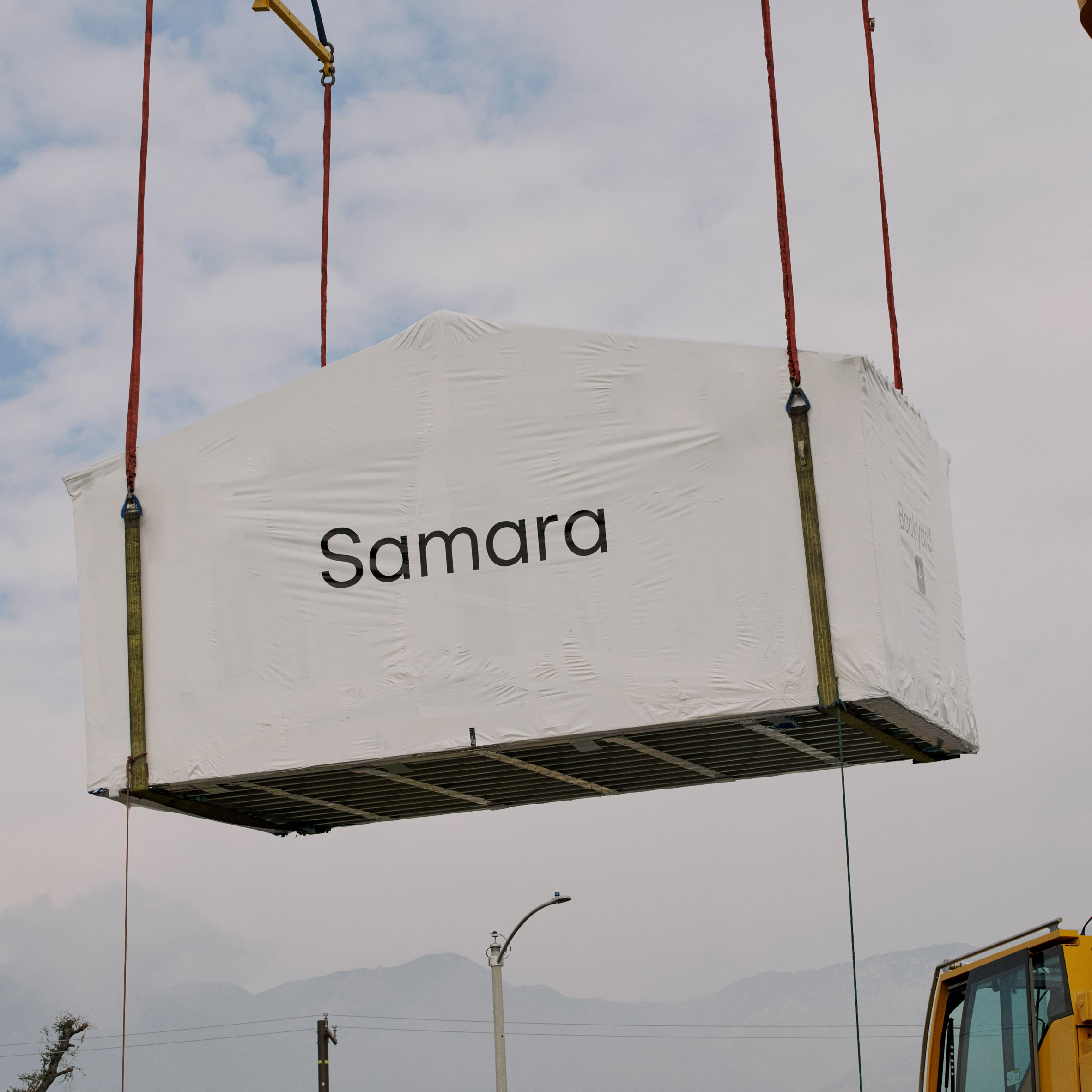
Photographs and reporting via Dezeen (Ben Dreith, January 26, 2026).
Samara, the factory-built ADU company co-founded by Joe Gebbia, lowered its first wildfire-rebuild unit onto a concrete foundation in Altadena last week. The 950-square-foot, two-bedroom, two-bathroom home was built in Mexico, shipped to LA in sections, and provided at no profit to a family that lost their home in the January 2025 Eaton fire. The full cost was covered by local non-profit Steadfast LA. Per Samara's representative speaking to Dezeen, this is the first in a planned series of LA wildfire-rebuild units the company expects to deliver throughout 2026. For LA-County readers tracking the post-fire rebuild, this installation is the first concrete sign that the factory-build sector is moving from announcement to address.
The project
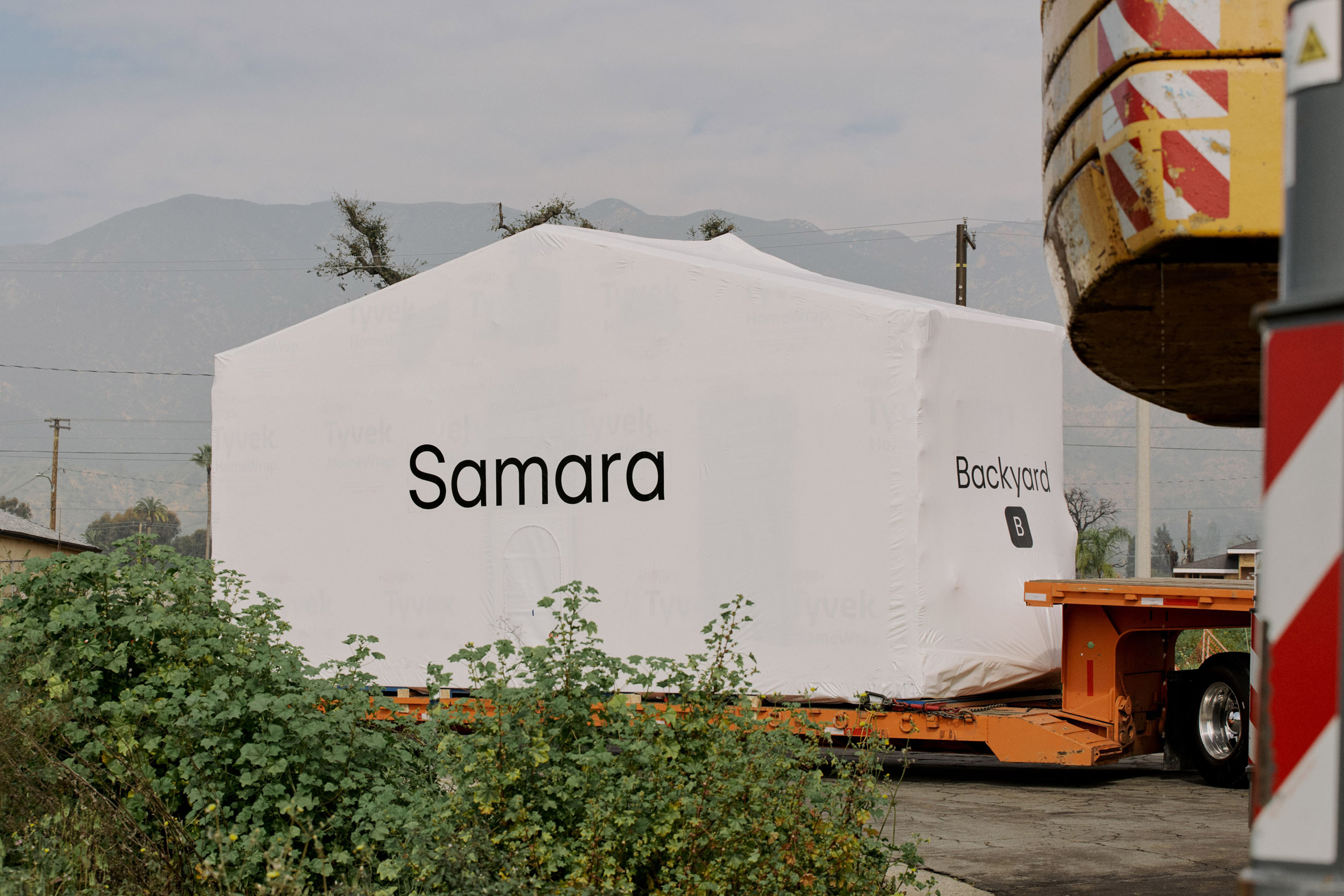
Factory-built, site-installed. Most of Samara's steel-framed units are assembled in a factory in Mexico, shipped to the building site in sections, and laid side by side on concrete foundations. The fibre-cement panels, standing-seam roof, windows, and interiors are installed and inspected on site after the box has landed. The Altadena unit lowered into place last Thursday is the first of the series.

950 sf as a primary residence. Samara was founded to build backyard ADUs, secondary to an existing main house. In the LA wildfire context that pattern flips. The Altadena unit functions as a full primary residence for a family whose previous home was destroyed. Per the company representative, "many of the homes lost in Altadena were 1,000 square feet or smaller", making the 950 sf Samara unit a defensible replacement, not a downgrade. The model is one of three Samara now offers, all designed to work as a primary dwelling on a single-family lot.
The timeline that matters
34 days from approval to install. Samara reports it took 34 days between the city's approval of the permit and final installation on site. The permit itself took about two months to approve. That is a meaningful compression of the typical rebuild timeline. A traditional stick-built home of similar size in LA County's post-fire context can take 18 to 24 months from permit submission to certificate of occupancy. The Samara approach front-loads the manufacturing to overlap with the permit review, so when the permit lands, the box is already partially built and ready to ship.
Pre-approved plan programs. Both LA County and the City of Los Angeles run expedited planning programs for ADUs that use pre-approved designs. Samara has fit into those programs and the parallel manufacturing track. For homeowners rebuilding from the 2025 fires, the combination of pre-approved plan + factory-built construction collapses the project schedule meaningfully compared to a clean-sheet design. The pre-approval list at LADBS is published online and updated as new vendors qualify.
Why this matters for the LA rebuild
The Eaton and Palisades fires destroyed more than 16,000 buildings. The January 2025 wildfires across LA County destroyed a documented 16,000-plus structures, most in Altadena and the Pacific Palisades. The official rebuild pace, even with the AB 38 streamlining and the recent AB 462 urgency provisions, is significantly slower than the displaced households need. Factory-built replacements like the Samara unit are not a substitute for the city's full rebuild capacity, but they are a real wedge of housing that lands faster.

Non-profit partnerships and the cost question. The Altadena unit was provided at cost by Samara and covered entirely by Steadfast LA for the homeowner. That model does not scale to every rebuild family, but for the first wave of installations it has produced a real outcome with a real address. Expect a mix of nonprofit-subsidized installs alongside market-rate orders as Samara's LA throughput ramps in 2026.
The Altadena specifics. Altadena lost more than 9,000 structures in the Eaton fire alone, the highest single-area loss in the LA County rebuild. The neighborhood's mid-century single-family stock was a particular fit for the Samara model: relatively small footprints, generous side yards, and standardized utility layouts. The first installation is on a lot whose previous home and detached garage both burned to the foundation.
What to watch next
Samara delivery volume. Samara says the Altadena unit is the first in a series planned through 2026. The pace and locations of subsequent installs will signal whether the company's LA presence is a one-time wildfire response or a durable model for the broader ADU market.
Replication by other manufacturers. Plant Prefab, Cover, Connect Homes, and a handful of other LA-area prefab firms have similar manufacturing capacity. The Samara installation has set a benchmark for what is operationally possible in a post-fire rebuild context. Expect more of these stories through the year.
If you are rebuilding from the 2025 fires and considering a factory-built path, A-du's marketplace lists the LA-area prefab firms that have actually permitted under the post-fire framework.