SB 1117 Would Cut ADU Impact Fees for Units Over 750 Square Feet
Chris Koss, AIA|Published June 9, 2026|Last updated June 10, 2026
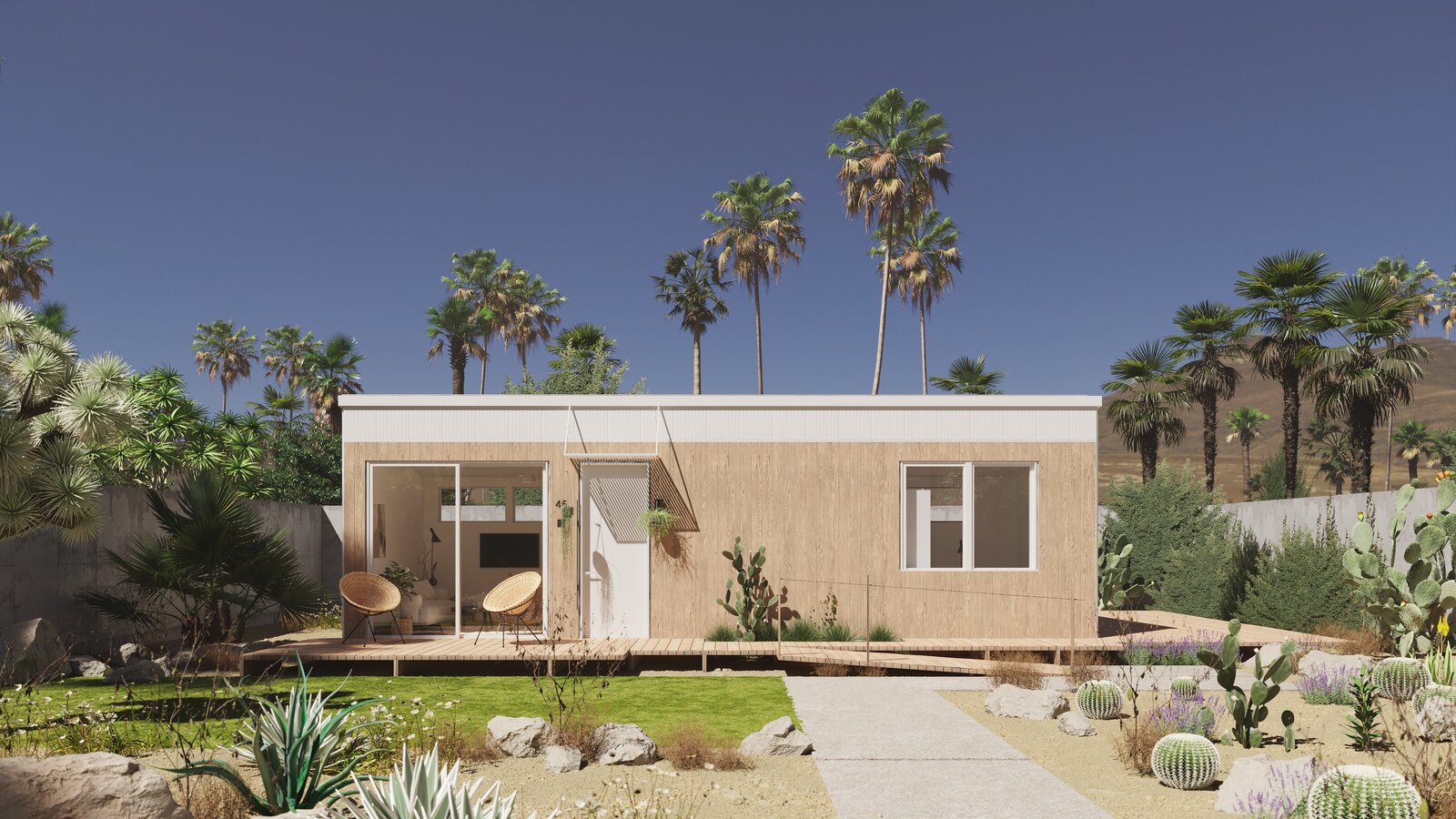
California's SB 1117, introduced in February 2026, proposes a new impact fee formula that charges ADU builders only on square footage above the existing 750-square-foot exemption line.
Photography via Dwell.
A bill in California's 2026 legislative session would fix one of the odder math problems in ADU cost planning. SB 1117, introduced by Senator Cervantes on February 17, 2026, would amend Government Code Section 66311.5 to change how impact fees are calculated for accessory dwelling units above 750 square feet. Instead of basing fees on the full ADU footprint (proportional to the primary dwelling), the bill would limit the fee base to only the square footage exceeding 750 square feet. The bill has not passed yet, but it is active in the 2025-2026 session and would take effect January 1, 2027 if chaptered by September.
What the current impact fee law says
California's Mitigation Fee Act governs how local agencies charge impact fees for new construction. For accessory dwelling units, Government Code Section 66311.5 sets three tiers that have been in effect since January 1, 2026.
750 square feet or less. No impact fees. A local agency, special district, or water corporation cannot impose any impact fee on an ADU with 750 square feet of interior livable space or less. This exemption is already law.
JADUs at 500 square feet or less. Also exempt. Junior ADUs (units converted entirely within the existing single-family structure) face no impact fees up to 500 square feet of interior livable space.
ADUs above 750 square feet. Here is where the current law creates a sharp discontinuity. Any impact fees for an ADU over 750 square feet must be charged proportionately in relation to the square footage of the primary dwelling unit. In practice, a 900-square-foot ADU on a property with a 1,800-square-foot primary dwelling carries fees proportional to half the primary dwelling's full impact fee exposure. The entire 900 square feet goes into the calculation, not just the 150 square feet that exceeds the exemption threshold.
That proportionality rule makes the jump from 749 to 751 square feet expensive in jurisdictions with meaningful development impact fees. Transportation, parks, schools, libraries, and fire or police development fees can all fall under the Section 66311.5 umbrella, which covers fees defined under Government Code Section 66000 and Quimby Act park fees under Section 66477.
What SB 1117 would change
The bill adds six words to the existing fee formula in subdivision (c)(1) of Section 66311.5: "and only on the area in excess of 750 square feet of interior livable space." That phrase, inserted directly into the Government Code text, shifts the fee base from the full ADU footprint to only the portion above the 750-square-foot line.
Using the same 900-square-foot example on a 1,800-square-foot property: the proportionality calculation moves from 900 divided by 1,800 (50 percent of the primary dwelling's fee exposure) to 150 divided by 1,800 (roughly 8 percent). For that unit, the impact fee burden drops by more than 80 percent. The closer a unit is to the 750-square-foot line, the sharper that drop becomes. A 760-square-foot ADU on a 1,500-square-foot primary dwelling currently carries fees on the full 760 square feet. Under SB 1117, the same unit would carry fees on only 10 square feet.
The bill explicitly applies to all cities, including charter cities, through a statewide-concern finding. That matters for Los Angeles, San Francisco, and other charter jurisdictions that sometimes assert separate authority over development fee structures.
What this means if you are planning a build over 750 square feet
If you are a first-time ADU client pricing a unit right now, the 750-square-foot mark is already a key decision point. One of the most common design moves to avoid impact fees entirely is capping the unit at 749 square feet, sometimes at the cost of a second full bathroom or a meaningful dining area. SB 1117, if it becomes law, would soften that constraint considerably.
Under current law, that 900-square-foot example unit (on a 1,800-square-foot property) carries fees proportional to half the primary dwelling's full exposure. Under the proposed formula, the same unit would be assessed fees on only 150 square feet. That is a real planning number worth running before you commit to a floor plan. The two-bedroom, two-bath ADU that your contractor quotes at 880 square feet would move from a fee base of 880 square feet to a fee base of 130 square feet.
The bill also preserves an important existing protection: utility connection fees and capacity charges are separate from impact fees and handled under subsection (b) of the same code section. An ADU is generally not treated as a new residential use for water and sewer connection fees unless it was built alongside a new single-family dwelling. SB 1117 does not disturb that provision.
Where the bill stands and what to watch
As of its February 17, 2026 introduction, SB 1117 is at the early committee stage. It requires a majority vote and was referred to the fiscal committee. There is no state reimbursement obligation tied to the bill (local agencies absorb any reduction in fee revenues), which simplifies its path compared to bills that create state mandates requiring offsetting general-fund transfers.
California's legislative calendar requires bills introduced in the second year of a two-year session to pass both chambers by mid-September 2026 to be sent to the Governor. A signed bill would take effect January 1, 2027. Track the current status directly on the SB 1117 leginfo page through the summer. If the bill clears committee hearings, it is worth revisiting your unit's target square footage before locking in construction documents.
For homeowners working through permit cost estimates under current law, A-du's permit fee calculator lets you model current-law impact fee exposure by city while SB 1117 works through the legislature.