California's Free ADU Plans: When the Catalog Beats a Custom Architect
Chris Koss, AIA|Published June 5, 2026|Last updated June 10, 2026
AB 1332 required every California local agency to publish a pre-approved ADU catalog by January 2025. LADBS and Riverside DWELL show what good ones look like and when the free plan wins over a custom architect.
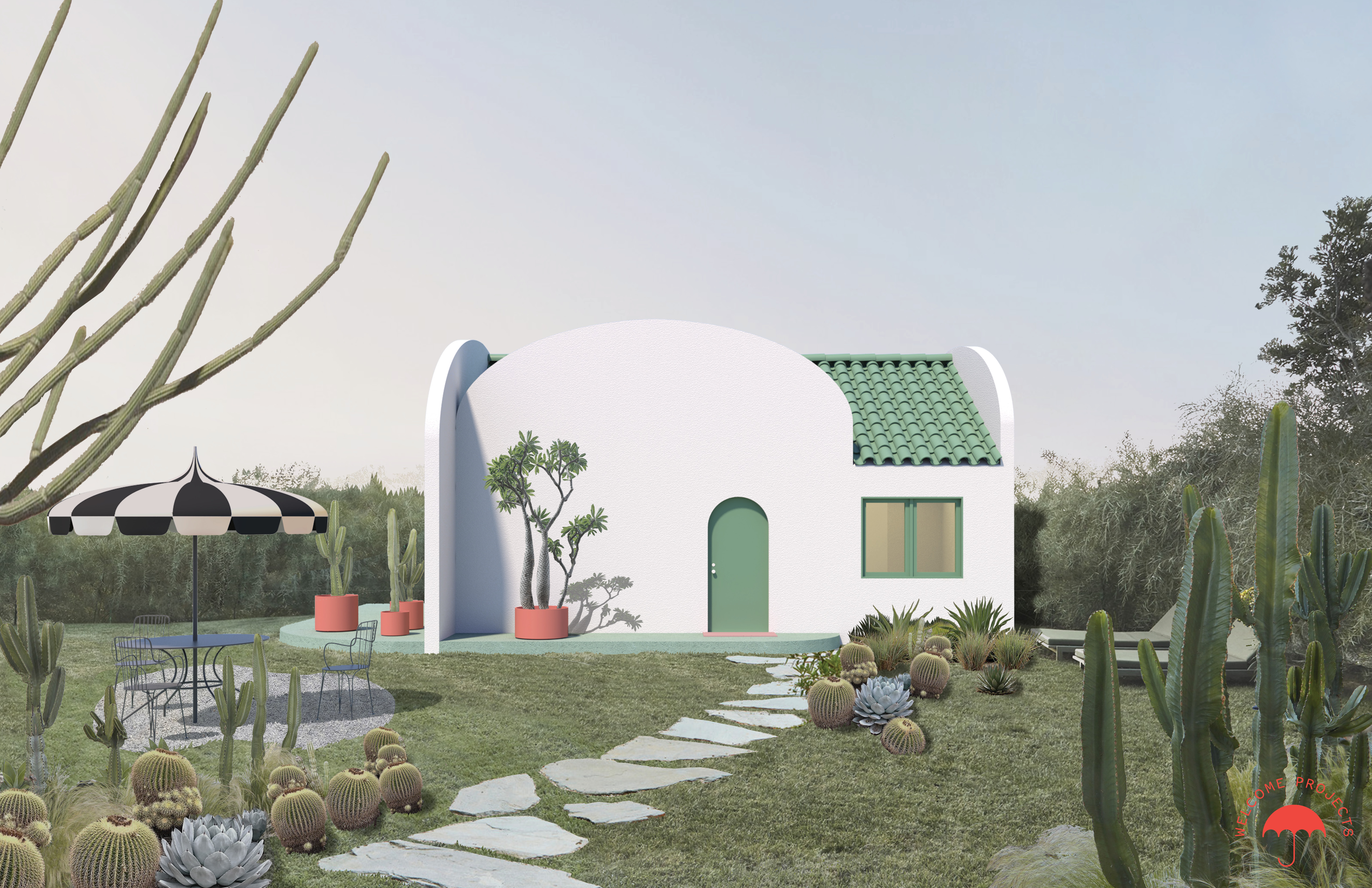
Standard plan rendering by Welcome Projects, from the LADBS Standard Plan Program.
Every California local agency was required to have a pre-approved ADU plan program in place by January 1, 2025, under AB 1332 (Chapter 759, Statutes of 2023). The law's logic is straightforward: if a city reviews the same floor plan repeatedly, it should review it once, approve it, and let homeowners reuse that approval rather than starting from scratch every time. Two programs show what this looks like in practice: the LADBS Standard Plan Program in Los Angeles and Riverside's DWELL program. Both offer code-compliant designs at no design fee. Neither is the right choice for every site.
What AB 1332 requires of every California local agency
AB 1332, authored by Assemblymember Juan Carrillo and chaptered October 11, 2023, added Section 65852.27 to the Government Code. It requires each local agency to accept ADU plan submissions for preapproval, post approved plans publicly so any homeowner can use them, and approve or deny preapproval applications within a defined period. Agencies may charge a fee to cover the cost of plan review, but once a plan is preapproved, any homeowner using it does not pay for a fresh design review. They pay only standard permit fees for their specific site. The preapproval happens once; the benefit carries forward to every homeowner who subsequently pulls from the catalog.
The result is that California now has, at least on paper, a network of catalogs across its 500-plus local jurisdictions. The depth of those catalogs varies considerably. Los Angeles and Riverside happen to be two cities where the program has real options worth comparing.
The LADBS Standard Plan Program in Los Angeles
LADBS implemented its Standard Plan Program to simplify the permitting process for ADUs built from designs that are constructed repeatedly. Plans are prepared by private licensed architects and engineers, pre-checked against the zoning and building code conditions that apply to most standard residential lots in the city. Using a standard plan reduces plan check time, which matters in Los Angeles where full plan check can take several months.
The current catalog includes designs from recognized firms: Welcome Projects, Jennifer Bonner's MALL practice, First Office, IT Houses, whY Architecture, Abodu, and sekou cooke STUDIO, among others. There is also the YOU-ADU, a free plan developed by the Bureau of Engineering aimed at affordability without sacrificing design quality. If you are a first-time ADU client and your lot is a typical flat parcel in the San Fernando Valley or South LA, one of these plans likely fits your site with minimal site-specific adaptation required.
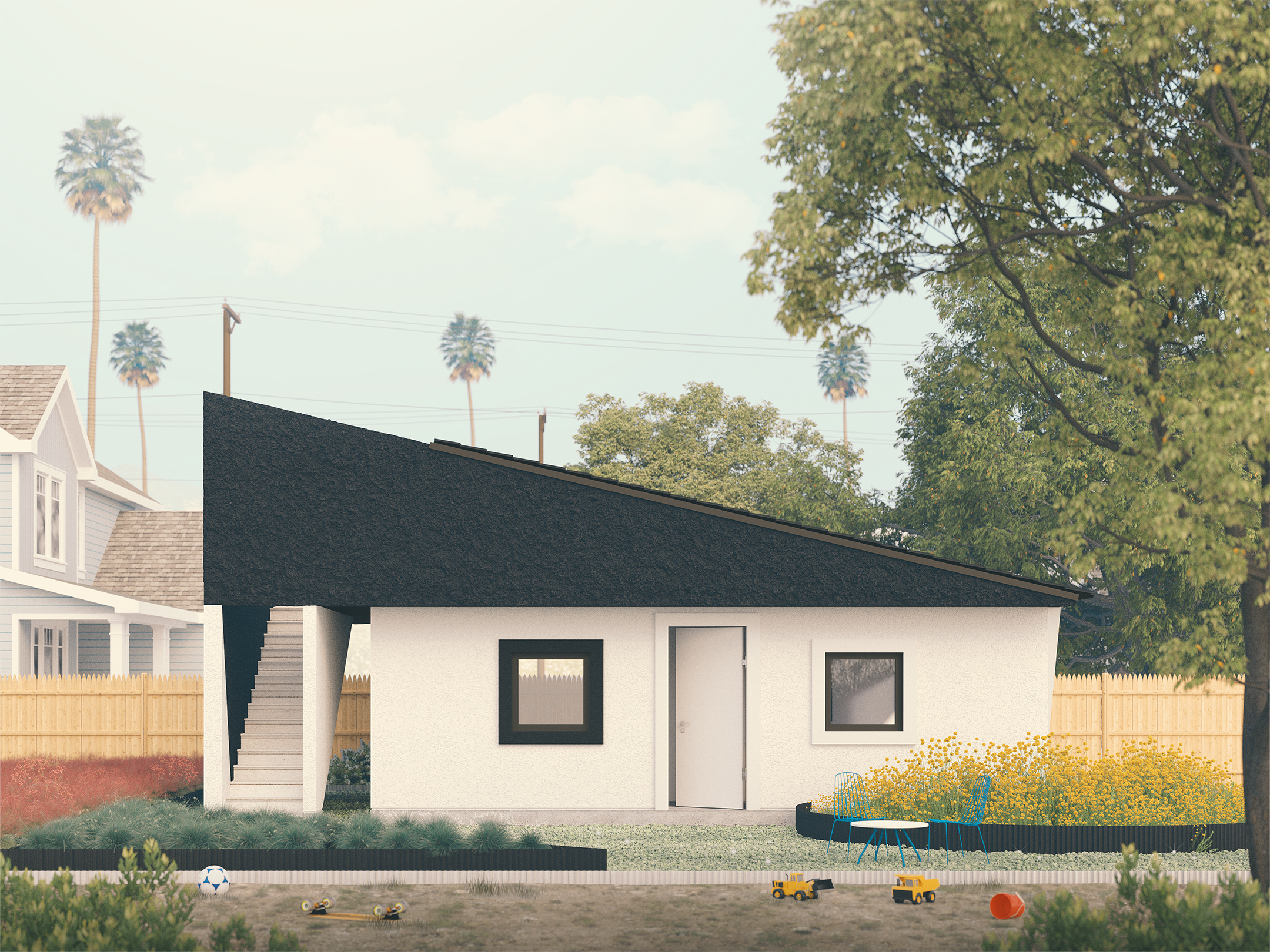
Riverside DWELL: four sizes, three exterior styles
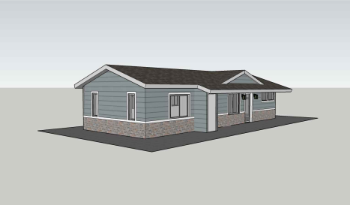
Riverside offers a different model under its DWELL program. Rather than a broad catalog of named-architect designs, DWELL provides four permit-ready plan types pre-approved by the Building Division: a single-story 746-square-foot one-bedroom, a single-story 800-square-foot two-bedroom, a single-story 1,020-square-foot two-bedroom, and a single-story 1,200-square-foot three-bedroom. Each plan type comes in three exterior styles (Craftsman, Ranch, or Spanish) to match existing homes in Riverside's residential neighborhoods.
The city is direct about what the program is for: permit-ready plans "streamline the permit process and reduce preconstruction costs like architecture and engineering fees," per the DWELL Riverside program page. Both the custom and permit-ready paths go through the standard building permit review, but the permit-ready path eliminates the design phase entirely. For a homeowner in Riverside with a standard flat lot who wants a two-bedroom unit, the 800-square-foot ranch option gets you into permit substantially faster than a custom design path would.
When the catalog wins and when it does not
Pre-approved plans work best when your site is uncomplicated: a flat lot, standard setbacks, no significant grade change, no hillside soils issues, and a footprint that fits within one of the available catalog sizes. In those situations, a first-time ADU client in Los Angeles or Riverside can select a catalog plan, pay for site-specific adaptation rather than full original design, and reach the permit counter substantially faster than the custom path allows.
Custom design wins in several specific situations. If your lot slopes more than roughly 10 percent, standard plans typically require expensive modifications that erode the time and cost savings. If existing setbacks are unusual, you may need custom drawings to place the unit correctly on your parcel. If none of the catalog designs match your aesthetic requirements, the catalog is a poor starting point. And if your city's catalog is thin (technically compliant with AB 1332 but offering only one or two designs), the decision may already be made for you.
Three questions before you commit to either path
If you are a building homeowner deciding right now, these questions determine which route is actually faster for your project.
Does your city have a real catalog? AB 1332's January 1, 2025 deadline has passed, but not every local agency launched a program with meaningful variety. Some filed a technically compliant catalog offering a single design. Check your city's building department page or call the permit counter before assuming a catalog covers your unit size and lot type.
What is your lot geometry? Verify your rear setbacks, side setbacks, and site slope before committing to a catalog unit. Most pre-approved plans are designed for flat, rectangular lots. If your parcel deviates significantly, get a licensed professional to assess whether a catalog plan adapts cleanly. A plan that needs major engineering revisions can cost more to adapt than a custom drawing set would have cost to produce.
What size do you actually need? Riverside's catalog runs from 746 to 1,200 square feet across four unit types. LADBS's catalog emphasizes architectural variety over a strict size range. If your project qualifies for financing programs tied to specific unit parameters, confirm the catalog plan you are considering fits within those requirements before finalizing the choice.
To compare pre-approved plan availability and permit timelines across California cities, A-du's build marketplace compiles current catalog data alongside contractor and permit guidance for each jurisdiction.