Building A-du · Part Ten: A-du Manage
Building A-du: Part Ten
Chris Koss, AIA|Published May 25, 2026|Last updated May 29, 2026
Bringing local property managers onto A-du Manage. How the marketplace gets seeded, how managers verify, and what it means for landlords who'd rather hand the work off.
The problem
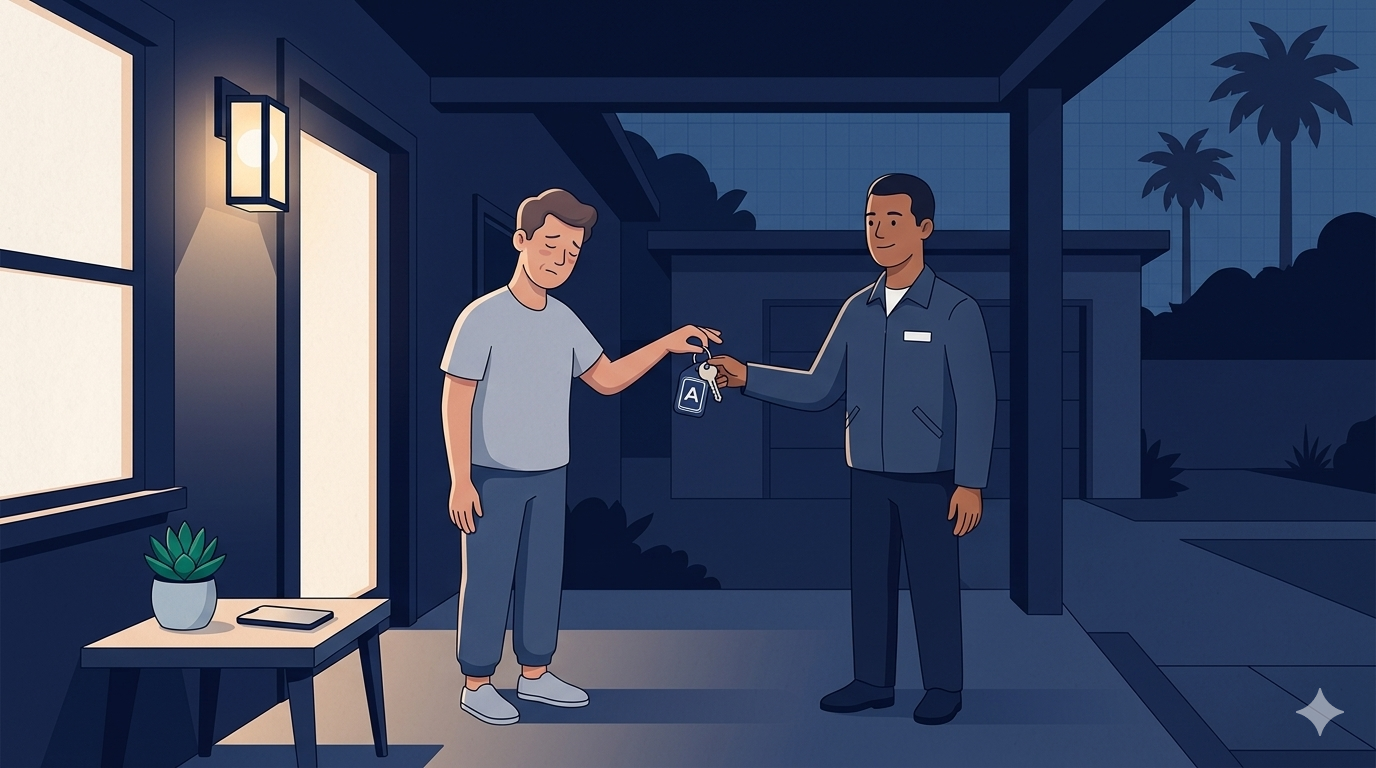
A-du Rent is built for landlords who want to do the work. KYC, screening, leases, supplementals, payments: the platform runs the whole flow, but the landlord is in the driver's seat the entire time. That's the right experience for a lot of homeowners. It's also the wrong experience for some.
Plenty of ADU owners (particularly ones who've ended up with multiple units, or who travel, or who simply don't want to be the person responding to a maintenance request at nine on a Saturday night) would rather hand the management work off. They want a property manager. The trouble is finding one who covers their neighborhood, knows ADUs specifically (which is not the same set of skills as managing a triplex), and works the way A-du works.
That's the gap A-du Manage's manager marketplace is built to fill. Not to be a national property management chain, but to be the place where a homeowner finds the right local manager, and where a local property manager who is good at this finds the homeowners who need them.
What we built
The manager marketplace runs on the same scrape-and-claim pattern as the services marketplace from the last post, with a heavier verification process behind it.
We seed the marketplace with property management companies operating in LA County, drawn from public information. Each seed entry shows the manager's service area, the kinds of properties they handle, and contact information, clearly labeled as having been seeded from public sources, with the manager not yet on the platform.
When a property management company finds itself in the marketplace and wants to take ownership, they go through a manager verification flow. That flow is more involved than the services-business claim flow, because the stakes are higher.
A property manager on A-du is going to be entrusted with landlords' real units, real tenants, and real money. So the verification process asks for:
- Identity verification (the same Stripe Identity step every landlord clears).
- Stripe Connect onboarding so payments to the manager can flow through the platform.
- Service-area details so we know which properties they actually cover.
- A manual review step on our side, where we look at the request and approve or reject it. This isn't automatic, and it isn't going to be automatic. The manual step is part of the trust model.
Once a manager is approved, they get an A-du Manage profile with a dashboard, a way to take on properties from landlords who want to delegate, and a workflow for handling the things property managers actually do: maintenance requests, tenant communication, rent collection on behalf of the landlord, and so on.
There's a related, smaller piece worth mentioning. A landlord on A-du can transfer management of a property to an approved manager through a management confirmation step. That step is explicit and documented. Both the landlord and the manager have to agree, the platform records the transfer, and the manager gains the appropriate access to that property's workflow. The landlord can revoke the management later if they need to, also through an explicit step. The relationship is real, recorded, and reversible.
What it means for you
If you're a landlord on A-du and you'd rather not be the one running the day-to-day on your ADU, A-du Manage's marketplace gives you a list of verified property managers who cover your neighborhood and handle units like yours. The handoff is a documented step inside the platform, not an off-platform agreement. You stay in control; you just stop being the front line.
If you're a property manager working in LA County, A-du Manage is a real source of leads for ADU work specifically, which is a lane most national management chains don't cover well. The signup is free. You verify, get approved, and start appearing in the marketplace for landlords whose properties match your service area. The platform takes a small fee on the work that flows through it, the same fee for every manager, clearly disclosed.
If you're a tenant in a managed property, the experience is the same as living in any other A-du-managed property: maintenance requests, payments, and communication run through the platform. You don't have to know the structural details of who owns what.
What I learned
The first lesson, repeating once more: build the claim and verification flows before you build the lead flows. The whole manager marketplace would have been a much rougher product if we'd gone the other way, if we'd built the landlord-side "find a manager" experience first, then scrambled to onboard managers who suddenly had landlords trying to engage them. The slower path is the right path here. By the time a landlord on A-du starts seeing managers in the marketplace, those managers are real, verified, and ready to take work.
The second lesson is about manual review. There's a flavor of software thinking where "manual" is a dirty word: if a step isn't automated, it isn't scaled. I think that's the wrong frame for trust-critical work. The manual approval step in the manager onboarding flow is intentional. It's a small human filter on top of the documentary verification, and it catches things (service-area mismatches, business model mismatches, the occasional submission that just doesn't smell right) that no algorithm is going to catch reliably. The right number of manual review steps in a marketplace isn't zero. It's the smallest number that's still defensible.
The third lesson, and this is the lens I started the series with, is that ADU management is a local business, and the platform's job is to honor that. A national company that manages a million units in fifteen states is the wrong tool for a single ADU in Mar Vista. A small local property manager who knows the neighborhood, knows ADUs, and lives within twenty minutes of every property they cover is exactly the right tool, and they tend to be the people who get drowned out by the bigger logos. A-du Manage is built to surface them.
That's the architect's lens, more or less. Proximity matters. Buildings live in neighborhoods, neighborhoods live in counties, counties live in cities. The infrastructure that serves them works best when it stays at the same scale.
A note on the series
That's ten posts. If you've read this far, landlord, tenant, vendor, service business, property manager, thank you. The shape of A-du in your head should now match the shape of A-du on disk. Three components: Rent, Build, Manage. A trust stack under all of them: identity, screening, leases, payments. A respect for local sources of data and for the people behind them. A platform that's trying, in real terms, to make ADUs work for the homeowners who built them, the tenants who live in them, the architects and engineers and contractors who designed and built them, and the local businesses around them.
If you've used A-du and you have a story I should write about next, you can write me at admin@a-du.homes. I'll keep the series going as we keep building.
That's the end of Building A-du for now.